
Two teams do not automatically need two buildings. Suffolk businesses can explore modular office prices for a shared arrangement as well as separate office units, then decide what the extra separation actually buys. The right choice may reduce duplicated rooms, or it may give an independently operating group space it genuinely needs. Compare useful provider offers for potential savings of up to 30%.
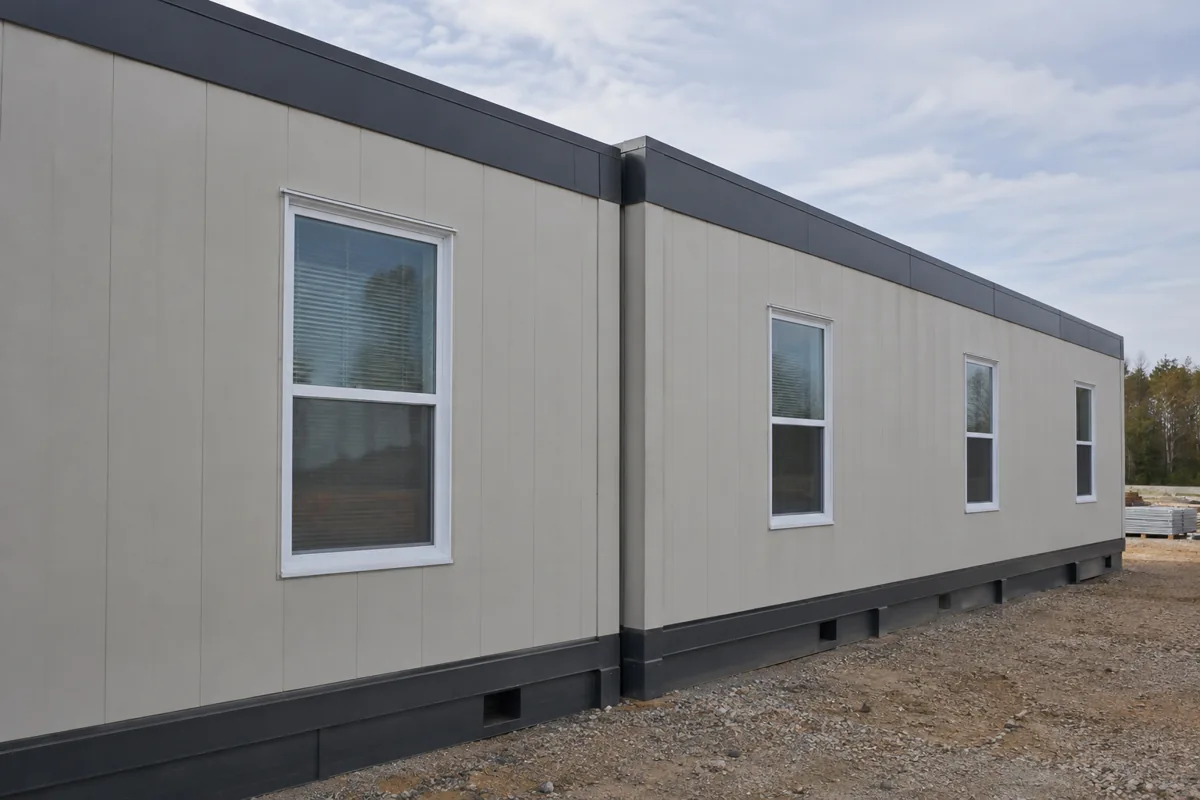
For the wider project picture, explore Virginia modular buildings alongside your office space plans.
Start with the relationship between the groups, not a building count. Do they need one another throughout the day? Do they serve different visitors, keep different hours or have requirements that should be assessed separately? Those answers give the provider something more useful than two department names.
Identify what can sensibly be shared
Meeting space, ordinary office equipment and some support areas may be used jointly where appropriate. Check when they are needed. A shared room that both groups require at the same time is not equivalent to having enough capacity, however attractive the saving looks on paper.
Review office layout options with the normal overlap shown. Give each group sufficient working space and make shared use understandable under your procedures. Any privacy, security or technical requirement should be evaluated against the proposed specification rather than inferred from a partition or an extra door.
Price independence where it has a real purpose
Separate modular office buildings may be worth considering when the uses genuinely need to operate independently. Describe that boundary clearly. It is less convincing to buy a second building, duplicate supporting space and then require staff to walk between the two repeatedly for ordinary tasks.
Have the appropriate parties assess the Virginia site's arrangement for each alternative. Two structures do not simply mean twice the purchase price of one smaller unit; the proposed installation and services need their own defined scope. Likewise, do not assume a larger shared building can occupy the available space without site review.
Keep visitor arrangements in the discussion. People should understand which office they need without being sent back and forth between teams. The aim is a workable business arrangement, not just an orderly diagram of departments.
Choose the simpler arrangement that does the job
Use the building cost guide to examine the complete offers and work arranged separately. Ask providers to explain what differs between the shared and separate proposals. Retain the same actual functions in both so apparent savings do not come from quietly omitting something important.
If one building meets the need without constant scheduling conflicts or inappropriate overlap, sharing may be a sensible choice. If genuine independence matters, price it explicitly and understand the responsibilities it brings. Either way, the decision rests on how the business works—not the assumption that every team deserves its own building or that sharing is always cheaper.