
Get a classroom where resources are useful, not merely stored somewhere inside. Explore modular classroom prices for Chesapeake with the teaching routine explained. A cupboard or work surface earns its place when staff and pupils can use it appropriately during the lesson, without sacrificing the room's main purpose.
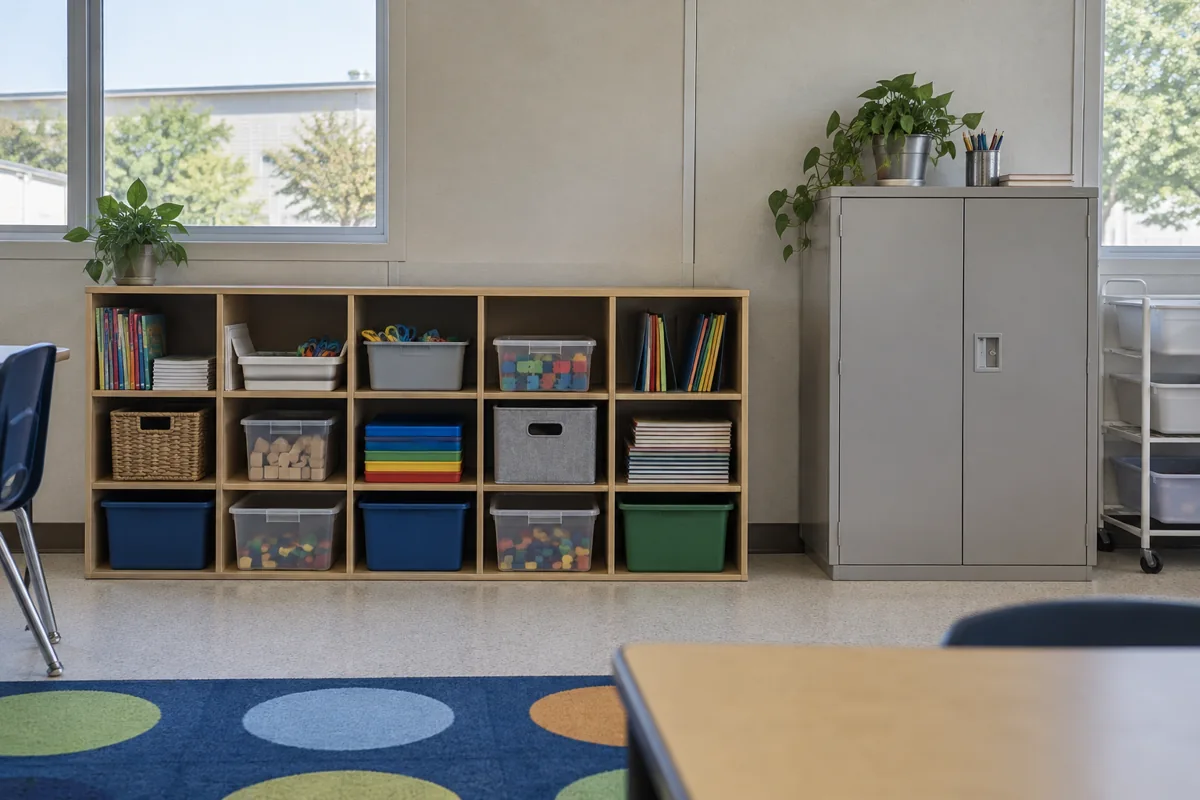
For the wider project picture, explore Virginia modular buildings alongside your classroom space plans.
Explain how resources reach the class
Some materials are handed out by the teacher; others are selected by pupils under the school's arrangements. Tell the provider how the important resources are used rather than asking generally for more storage. Their positions may affect the teaching activity even when the quantity of materials is modest.
Distinguish daily use from occasional items. A large collection used rarely may not belong in the most valuable part of the classroom, while frequently used materials may deserve a convenient provision. The school can identify that pattern without assuming all resources need the same treatment.
Any particular handling or suitability requirements should receive appropriate assessment. Don't treat an ordinary fitted unit as suitable for every material simply because it is in an educational building. Keep special needs explicit while avoiding unnecessary complexity for everyday supplies.
Review the resource positions with the lesson
On the classroom layout, show the intended fittings and furnishings. Consider when they are accessed and what else is happening at the time. A position that is convenient before class may be less useful when the room is occupied.
For example, placing all resources beside the teaching surface might concentrate activity in the same area the teacher needs for instruction. Another position may work better, subject to the actual arrangement and appropriate checks. The point is to discuss a real routine instead of accepting a tidy but untested drawing.
Ask which resources remain school-supplied and which fittings are included in the building. If the school brings its own substantial units, provide accurate dimensions. The provider should not have to price around a generic item that differs from what arrives.
Price the usable arrangement
If a fitted provision adds cost, ask whether a suitable school-owned item could serve the same purpose without creating another problem. Conversely, a cheap movable unit may not offer the function staff need. Comparing those real alternatives keeps the resource discussion connected to value instead of treating fitted storage as automatically superior.
Your Virginia school can use the building cost guide as background while identifying the specific scope. Keep optional fittings and separate purchases visible, so an apparently complete interior doesn't depend on an overlooked school order.
Compare modular classroom proposals against the routine staff described. A practical room need not have the most cupboards or the most elaborate fit-out. It should give the school a recognizable, priced arrangement where resources support the lesson rather than compete with it.