
An after-school learning room begins with a transition, not an empty desk. Students arrive from different classes, store belongings, check in, work independently, receive tutoring, take approved breaks, and leave with authorized adults. A Logan modular classroom should support that sequence without relying on daytime school spaces that may already be closed.
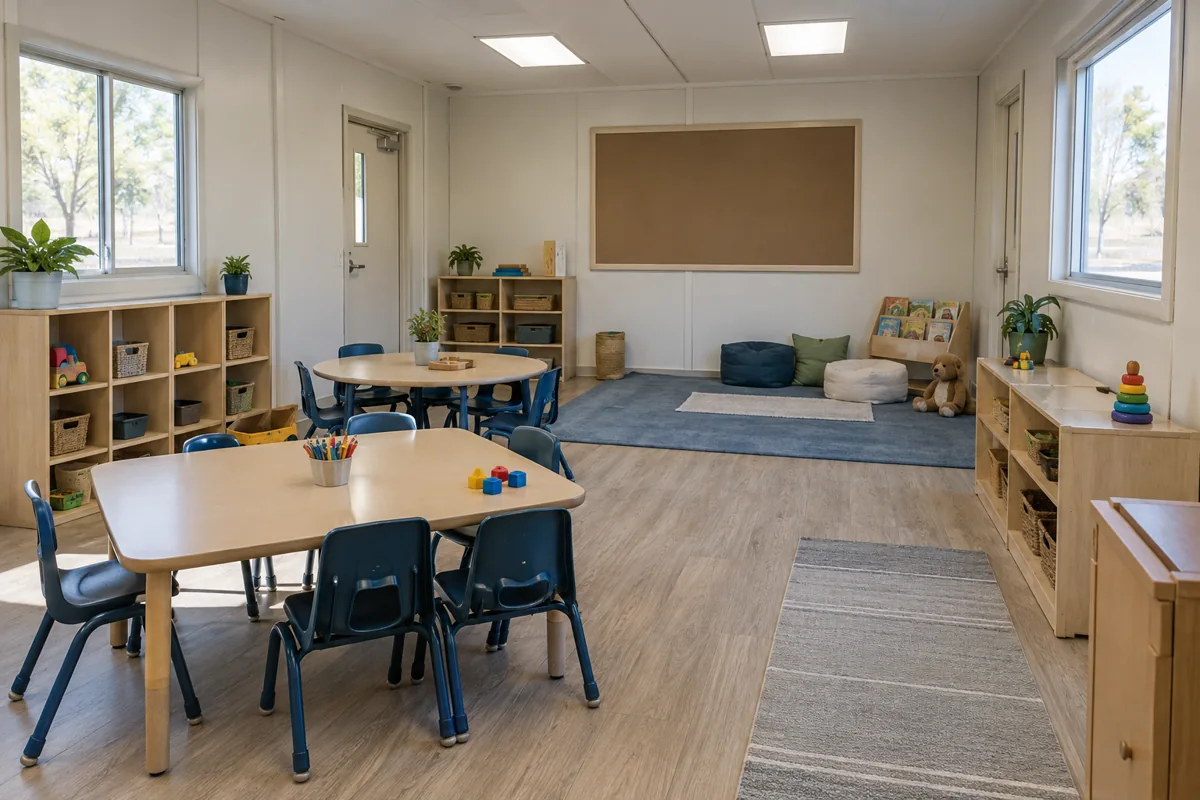
For the wider project picture, explore Utah modular buildings alongside your classroom space plans.
Build arrival and pickup into the room plan
Place attendance, backpacks, coats, family check-in, accessible movement, and staff sightlines before arranging homework tables. New arrivals should not cross quiet work, and pickup should not require adults to enter unrelated campus areas.
The classroom design guide can support the entry, learning zones, storage, and circulation. Actual enrollment and dismissal waves should test capacity.
Separate homework focus from active support
Independent work benefits from lower traffic and useful lighting, power, and data. Tutoring groups need conversation and shared materials. Furniture orientation and modest zoning can let both operate while staff retain oversight.
Students may work across subjects and grade levels. Keep reference materials, devices, supplies, and unfinished work identified so one learner’s project does not disappear during room reset.
Plan snacks, charging, and closing routines
If approved snacks are part of the program, define storage, serving, seating, allergy procedures, cleanup, and waste under owner policy. Keep food away from device charging and confidential program records. Staff need a clear final sweep for belongings, devices, materials, and attendance information.
Not every student leaves at the same time. Create a pickup waiting position that remains supervised but does not place conversation and coats beside learners still finishing homework.
Late-day technology support may be limited. Label chargers and spare devices, define what staff can troubleshoot, and provide an offline homework or reading option rather than opening locked daytime support areas.
Store tomorrow’s program materials separately from personal items left behind. The next staff member should be able to set up without sorting through an unresolved lost-property pile.
Utah and local requirements for occupancy, accessibility, supervision, sanitation where applicable, exterior access, fire and life safety, and education facilities require project-specific confirmation by professionals and authorities. No program availability or academic result is implied.
Compare prices for the full afternoon
Entry controls, exterior lighting, furniture, tutoring zones, device storage, charging, snack support where selected, extended-hour utilities, cleaning, and site work may cross contracts. Use the complete project cost guide.
Logan buyers can request current classroom prices with enrollment, operating hours, and known site. Program details can follow. Ask providers to show the busiest arrival, overlapping homework and tutoring, and secure family pickup.