
Building work slows when nobody owns the next answer. Room count, entrance location, utilities, finishes and site placement can each hold up several later tasks. A North Richland Hills modular project needs a compact decision system so factory planning and site work do not advance from different assumptions.
The broader Texas modular-building market gives buyers context, while the North Richland Hills project record should remain the source for approved scope and current decisions.
Create one brief and one revision trail
Combine the occupancy, room program, furniture, equipment, privacy, storage, accessibility and operating hours in a single brief. Attach the current site information and target schedule. Assign one owner to maintain it, and require proposed changes to state their effect on cost, timing, layout and site responsibilities.
Review modular building plans with end users before a layout is treated as final. Their comments should resolve specific work questions, not create an unlimited wish list. Mark required features, separately priced preferences and items that need professional or authority confirmation.
Before signoff, walk the current revision through a normal day and one difficult day. Check peak occupancy, a large delivery, a private meeting and an equipment problem. This exposes conflicts while they are still design decisions instead of field changes.
Tie each decision to the work it releases
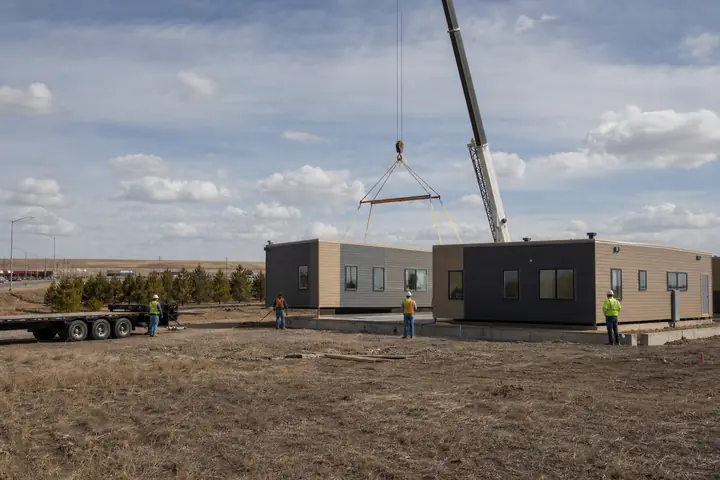
Utility locations influence both factory connections and site trenches. Entrance choices affect circulation, foundations and accessible routes. Module arrangement can change delivery and setting. A decision log should show those dependencies so the team knows why a response date matters.
Use the modular project planning guide to identify responsibilities that may sit outside the building proposal. Design coordination, freight, grading, foundations, utility work, entrance equipment, installation, inspections and closeout need named owners. Where facts are incomplete, use a visible allowance or open item rather than an undocumented assumption.
Level proposals against the approved version
Before commercial review, confirm that every respondent priced the same brief revision. Create a comparison showing inclusions, exclusions, alternates, schedule assumptions and owner work. If a supplier proposes a different plan, evaluate it as an alternative and explain the operational tradeoff instead of mixing it into the baseline.
The team can then request current modular building prices with a controlled scope and invite useful innovation without losing comparability. That discipline does more than organize paperwork. It protects the North Richland Hills project from paying for late clarification, duplicated work or a building based on yesterday’s decision.