
A ministry building is easier to keep open when staff can reach filters, shutoffs, cleaning storage and exterior equipment without disrupting a class. Baytown churches should include those ordinary maintenance tasks before they compare modular church building prices.
For the wider project picture, explore Texas modular buildings alongside your church space plans.
Texas Gulf Coast heat, humidity and heavy rain also connect entrance durability, drainage and equipment access to the long-term operating plan.
Protect the entrance from daily wear
Trace the path from parking and drop-off through a sheltered entrance. Provide a durable transition area for wet footwear and enough standing room that check-in does not hold the door open continuously.
Show where roof and canopy water moves. Drainage should lead away from thresholds, accessible paths and areas where families wait.
Place custodial storage near routine work with appropriate separation and ventilation. Staff should not move cleaning equipment through food service or children’s check-in.
Qualified professionals must assess site drainage, envelope, mechanical, accessibility and code requirements for the project. General regional context cannot determine the correct details.
Give service work its own route
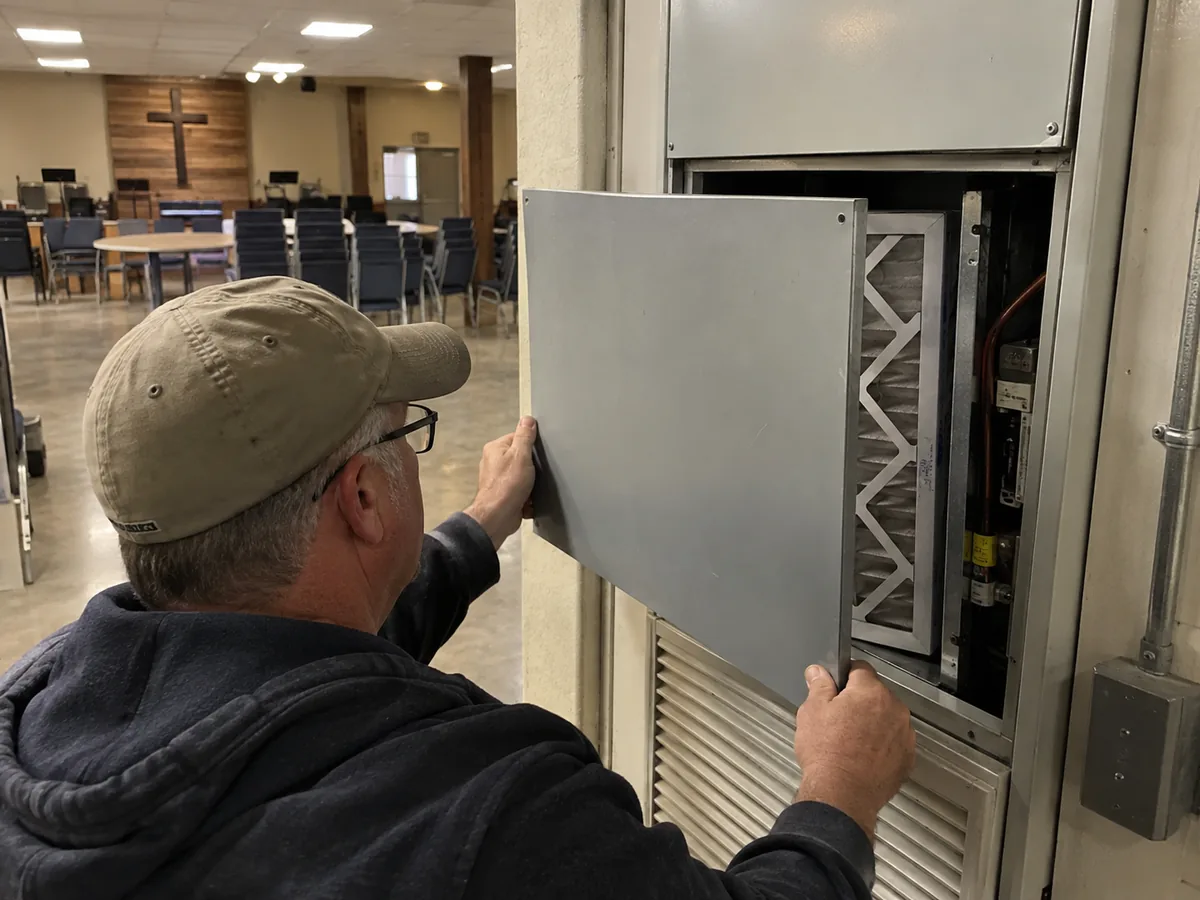
Review church building plans with mechanical areas, electrical access, storage and occupied rooms shown together. Service points should not be hidden behind permanent furniture.
Keep technicians away from the public welcome and private ministry rooms where possible. Routine inspection should not require a children’s class to move or an outreach appointment to pause.
Make basic controls and shutoff information understandable to authorized staff. The church should be able to report a concern accurately without opening equipment or improvising repairs.
Keep a simple location for manuals, service records and contact details that responsible staff can reach. Information scattered across offices makes an ordinary maintenance question harder to resolve.
Store electronics, curriculum and food-related items where their environmental and access needs are respected. An exterior closet is not automatically the right answer for every supply.
Test cleaning after a crowded event. Floor-care equipment, refuse and replacement supplies should move along a practical path without crossing a private meeting or blocking the exit.
Compare ownership responsibilities clearly
Ask providers to identify envelope features, mechanical scope, controls, access panels, storage and finish durability. Use the installed modular cost guide to connect them with design, freight, supports, utilities and completion.
Clarify who provides walks, drainage, equipment screens, connections and restoration. Request project-specific care information for the proposed systems rather than relying on broad expectations.
Walk through a rainy arrival, routine cleaning and a service visit before selection. A sound Baytown option will protect public circulation, give staff appropriate maintenance access and keep necessary care from becoming a recurring interruption to ministry.