
Applied math moves between explanation, team problem solving, measurement, modeling, and technology. Lancaster schools should price the teaching surfaces, flexible furniture, project storage, devices, and demonstration area with the modular classroom rather than fitting them into a conventional desk plan later.
For the wider project picture, explore Pennsylvania modular buildings alongside your classroom space plans.
Give students several ways to work through a problem
Map a typical lesson from short instruction to partner work, larger-group discussion, and a practical measurement or modeling task. Tables should support collaboration without preventing everyone from seeing the teaching wall. Provide enough writable surface for students to compare methods, not only one display controlled by the teacher.
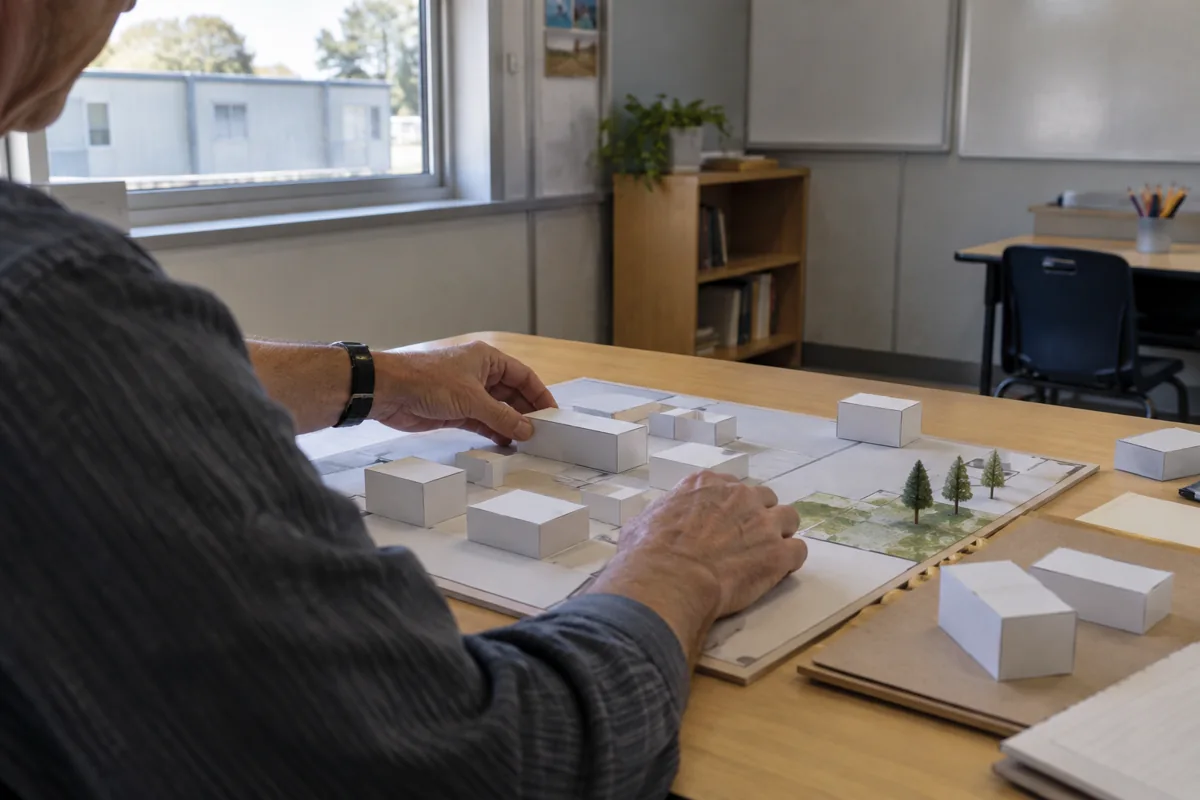
Use flexible classroom layouts to test direct instruction and project arrangements with chairs occupied. Mobile furniture can help, but it needs a storage or parking position when the floor is used for scale models, mapping, or full-size measurement exercises.
Coordinate tools, devices, and project storage
List graphing devices, laptops, displays, document cameras, printers, measuring equipment, and model-making supplies. Coordinate charging, data, power, and glare control so technology can move between groups. Frequently used tools should be visible and easy to return, while valuable devices need secure storage.
Applied projects often continue across several days. Deep shelves or project bins can protect models without taking over worktables. If the program includes cutting, messy materials, or larger fabrication, define a durable work counter and cleanup routine rather than letting the activity spread into a clean teaching area.
Compare complete classroom prices
Ask providers to itemize the modular structure, foundations, delivery, setting, utilities, electrical and data distribution, writable surfaces, built-in storage, project counter, permits, and restoration. The installed modular cost guide helps identify exclusions. Clarify which furniture, devices, and teaching tools are included.
Compare alternatives based on teaching capacity: one open room with mobile stations, or a main classroom with a smaller project lab. Keep class size, accessibility, storage, and technology equal. The lowest shell price is not better value if project work later displaces ordinary instruction.
Request prices with sample lessons
Provide enrollment, teaching formats, project sizes, furniture, technology, storage, utility needs, site access, and opening target. Two or three representative lessons can explain the room better than square footage alone. A detailed Lancaster modular classroom request lets providers price an applied-math environment that supports explanation, exploration, and visible reasoning.
Include how student work will stay visible after class. Pin-up rails, writable panels, model shelves, or a document camera can let one group learn from another’s approach. Display space should not consume the only wall available for direct teaching or block daylight needed at worktables.