
Public-safety theory courses may use briefings, maps, tabletop scenarios, communications practice, documentation, and structured debrief. A Harrisburg modular classroom should support those instructional activities without being represented as an emergency operations center, dispatch facility, response base, or certified training site.
For the wider project picture, explore Pennsylvania modular buildings alongside your classroom space plans.
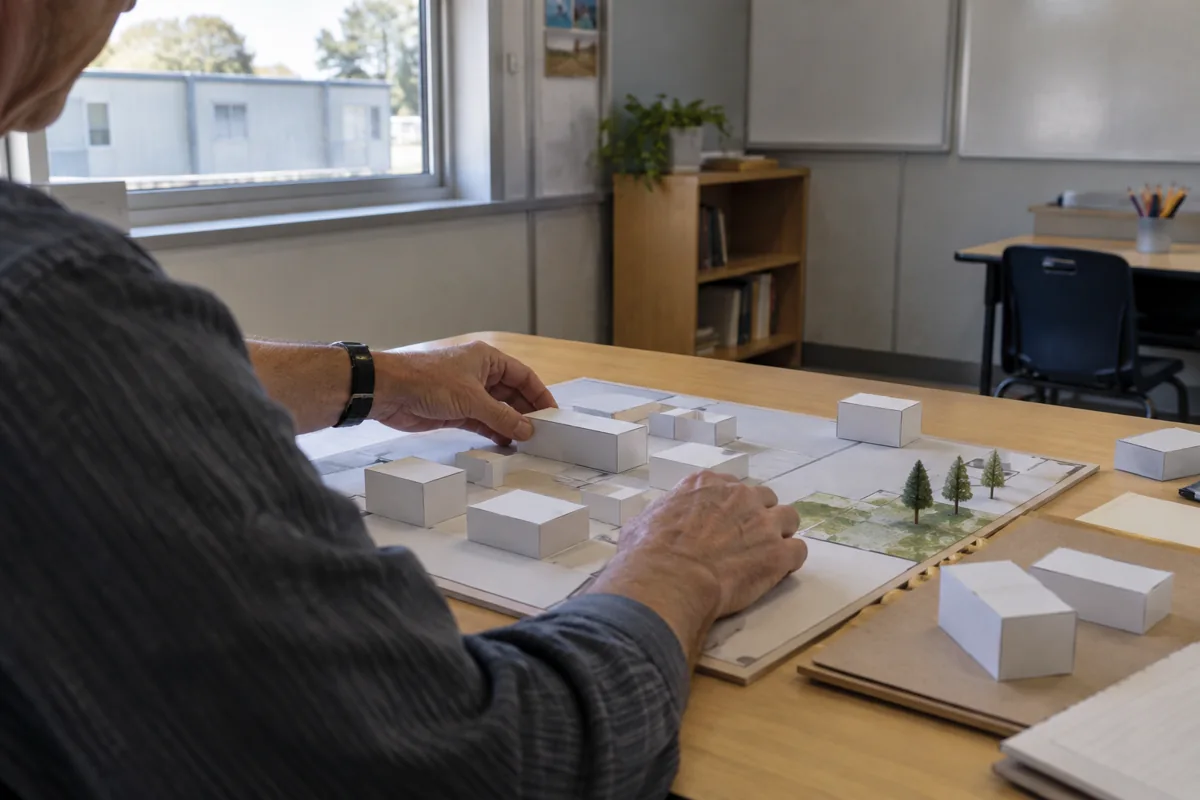
Build tabletop scenarios around shared information
Place team tables, the main situation display, maps, accessible positions, instructor observation, and update points at full occupancy. Groups should see changing information without leaving their assigned area or blocking another team’s discussion.
The education layout guide can support room planning. Program specialists should define equipment, communications practice, records, and any function beyond normal classroom instruction.
Keep demonstration equipment controlled
Training radios, headsets, maps, protective-equipment examples, forms, and scenario materials need issue, inspection, cleaning where appropriate, and secure return. Operational or restricted equipment should not be assumed. Separate ready teaching sets from items awaiting review.
Power and data should support the verified owner platforms while allowing a paper-based tabletop exercise during system maintenance.
Make debrief a different room mode
After a scenario, participants need to review decisions, compare records, and discuss alternatives. Provide a shared display and seating orientation that supports reflection rather than leaving teams facing separate maps. Store scenario outcomes under owner policy.
Observers need an assigned position and purpose. They should see the information flow without standing behind a team, interrupting communications practice, or becoming an unplanned source of hints during the exercise.
Scenario updates should enter through one controlled point so teams respond to the same information. A staging surface for instructors can separate the next update from materials already released.
Use ordinary, clearly identified teaching materials rather than realistic operational signage that could confuse visitors. The room should read as a classroom during both exercises and daily instruction.
Pennsylvania and local requirements for occupancy, accessibility, privacy, technology, equipment, fire and life safety, and education facilities require project-specific confirmation by qualified professionals and authorities. No certification or response capability is implied.
Price the teaching environment, not an operations label
Displays, maps, communications-training equipment, secure storage, furniture, technology, acoustic treatment where selected, commissioning, and site work may cross contracts. Use the installed modular cost guide.
Harrisburg buyers can request current classroom prices with class size, scenario formats, and known equipment. Technical details can follow. Ask providers to distinguish ordinary classroom systems, owner training devices, and any separately verified operational function.