
A bicycle-repair ministry needs room for assessment, tools, parts, instruction and completed bikes waiting for return. Leaning bicycles along the wall quickly consumes circulation. Springfield churches should define repair volume and services before seeking modular workshop building prices.
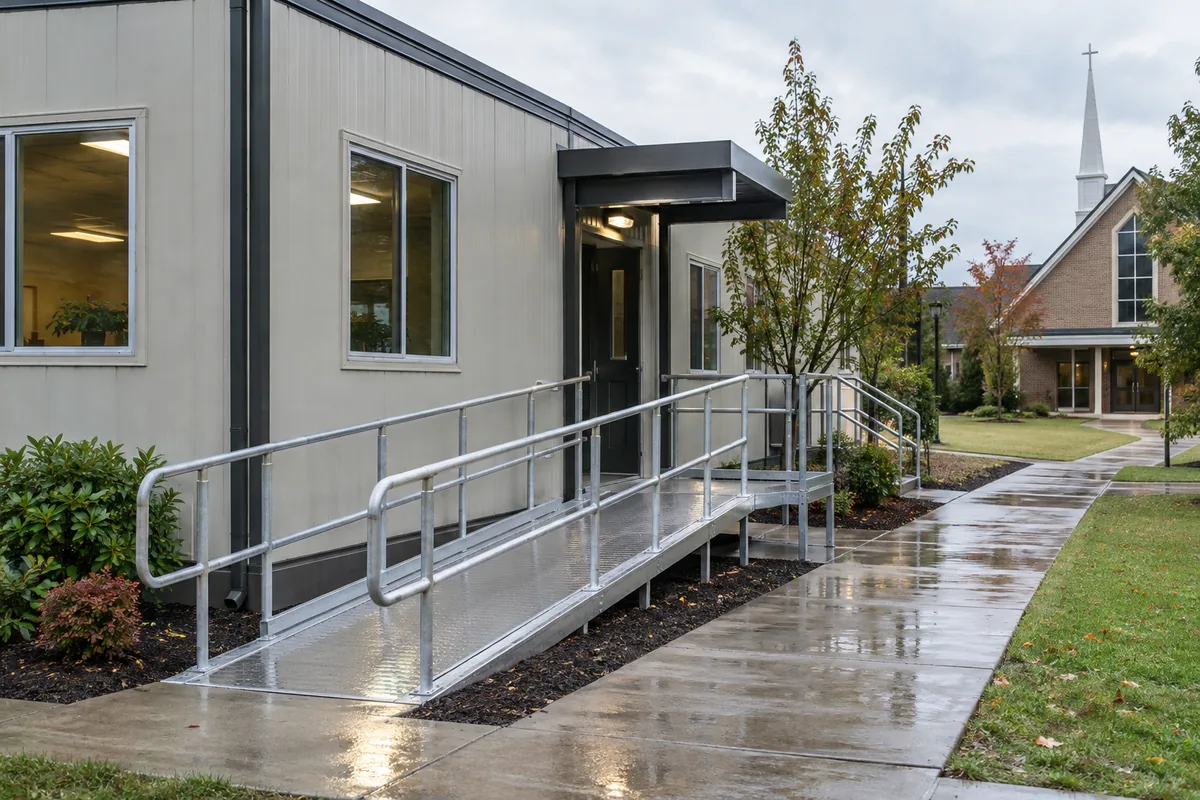
For the wider project picture, explore Oregon modular buildings alongside your church space plans.
Oregon rain makes covered receiving, drainage and wet-item handling practical property concerns. Repair processes and tools require qualified safety and building review.
Move each bicycle through clear stages
Separate incoming assessment, active repair, parts waiting and completed storage. Use racks or stands that keep handlebars and pedals from narrowing aisles.
Provide an accessible repair position with equivalent tools and working clearance. Volunteers should not have to move a bicycle through the instruction group to reach a stand.
Plan a covered landing area for wet bikes and a method for containing water and dirt. The public entrance should not become the drying zone.
Give leaders a visible checkout point for work orders, assignments and secure keys without placing paperwork on oily benches.
Rider pickup should occur away from repair stands and tool storage. A small waiting position can keep completed bicycles and visitors from competing for the same aisle.
Provide handwashing and a changing point for aprons or gloves. Food and personal items should remain outside the repair zone.
Control tools, parts and instruction
Use church service-space plans as a starting point, then add workstands, tool boards and bins at real dimensions. Lock higher-risk tools according to program procedures.
Organize parts so volunteers can count and replenish them without unloading entire shelves. Waste fluids, damaged components and recycling each need appropriate handling.
Set aside a clean teaching corner for demonstrations and safety briefings. Task lighting and power should serve workbenches without cords across the floor.
Personal belongings, refreshments and cleaning products require locations outside parts storage and repair surfaces.
Large replacement parts and shipping cartons need temporary storage that does not hide exits. Define how packaging leaves the building after inventory is checked.
At closing, volunteers should be able to count tools, secure unfinished work and return stands without moving bicycles into the public entrance.
Price the functioning workshop
Review the modular project cost guide while accounting for professional services, freight, foundations or supports, utility connections, setup and exterior improvements. Add ventilation, electrical distribution, durable floors, racks, benches, security and covered receiving.
Ask providers to identify owner-furnished tools and specialized equipment. Local permits, occupancy, environmental and property requirements must be confirmed for the Springfield project.
Follow a wet bicycle from arrival through assessment, repair, secure holding and return. A practical building will protect circulation, help volunteers account for equipment and keep total costs visible.