
The office supporting a retail business has a different job from the area where customers buy. Huntersville organizations can compare modular office space for administration without automatically turning the requirement into another sales location. Keeping that distinction clear helps providers price the actual use and gives staff a place to complete work that doesn't belong on the selling floor.
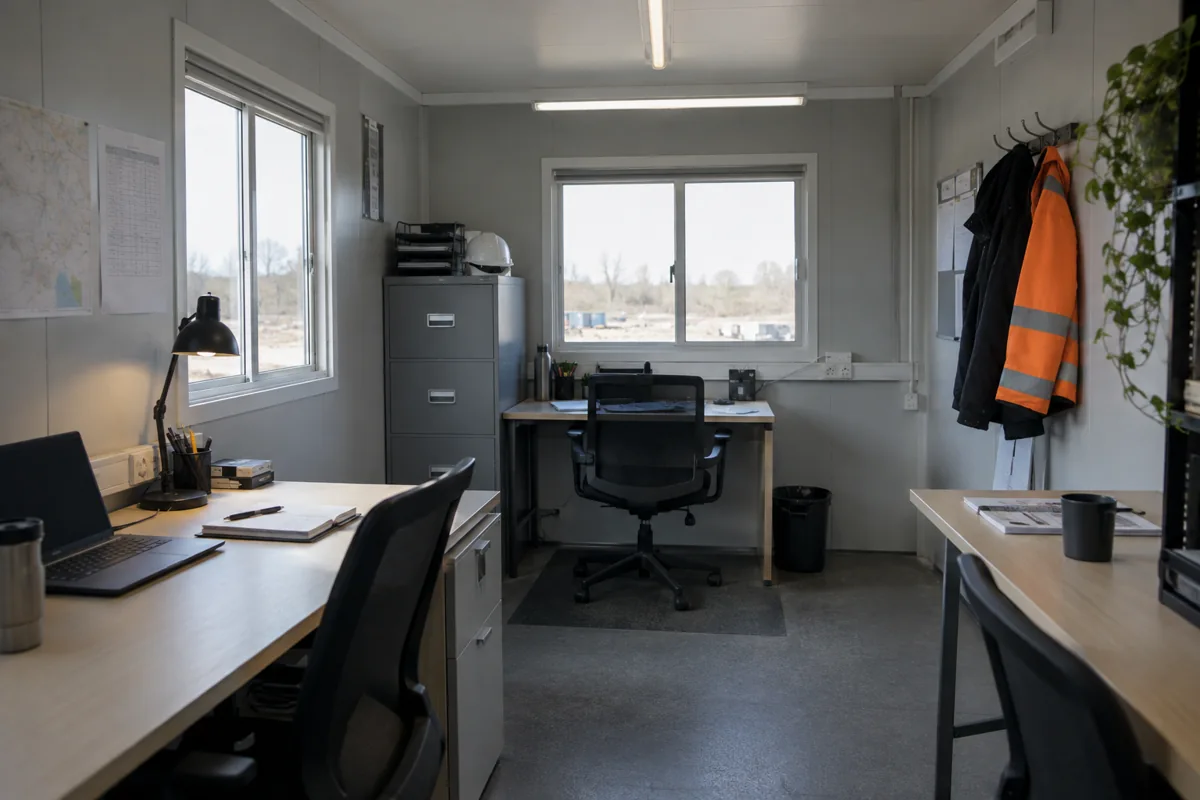
For the wider project picture, explore North Carolina modular buildings alongside your office space plans.
Identify the work that leaves the sales area
Describe the administrative tasks intended for the new office and who performs them. Some work may be carried out during quiet periods; other work may need a dependable place regardless of customer activity. The aim is to define a useful office function, not simply move anything awkward out of the public area.
Consider what contact with the retail operation remains necessary. An office that is entirely detached from the information it needs may create extra difficulty rather than resolve it. Ask how the relevant updates and questions reach staff, without assuming that every administrative activity needs to sit beside the sales counter.
Consider how a question from the selling area reaches administration while customers are present. Staff may need a short communication path without moving the administrative task onto the public counter. Describe that interaction to the provider. It helps establish the office's useful relationship to retail work while keeping the two functions distinct rather than treating the extra building as general overflow.
Keep customer-facing use explicit
If customers will actually shop or be served in the new building, say so. Our retail building information is the more relevant starting point for that activity. An office proposal should not quietly acquire a public selling function after it has been described and assessed as administration.
Use office floor-plan guidance for the genuine office requirement. Show equipment, working surfaces and any necessary private activity. Do not assume the sales floor's layout or furniture can simply be copied at smaller scale; the work being supported is different.
For the North Carolina property, have the Huntersville installation, access, services and intended use reviewed appropriately. Keep the distinction between office and retail activity consistent in those discussions. This is a project-specific assessment, not a claim that an office label settles the requirements.
Compare the accommodation the staff actually need
The complete cost guide helps keep furnished supply and preparation visible. Ask providers to price the same administrative function rather than comparing a basic office with a proposal that includes a different commercial use.
Get Huntersville office prices for suitable options; comparisons may save up to 30%. Before choosing, ask what work becomes reliably possible away from customer activity and how its results return to the business. A worthwhile back office earns its place by completing that supporting role, not by becoming an undefined extra room whose purpose changes whenever the selling area becomes busy.