
When an office project in Clovis has a defined end date or uncertain duration, the planning question is how to preserve useful work while avoiding commitments the buyer cannot yet support. Temporary does not mean improvised: staff still need a safe route, functional workstations, storage and reliable services. Begin with the tasks that must continue and identify what can be left out. Then compare modular office prices alongside rental or ownership terms and the full project scope.
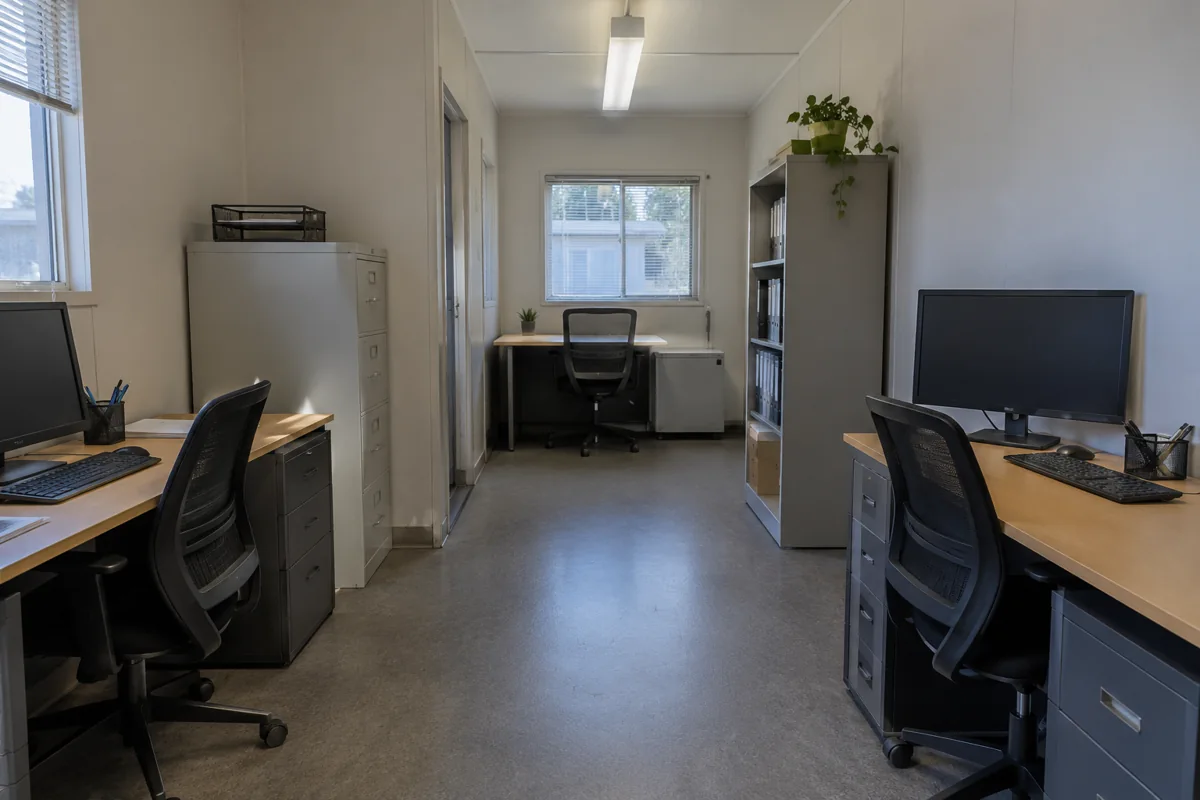
For the wider project picture, explore New Mexico modular buildings alongside your office space plans.
Separate the term decision from the room plan
Write down what is known about the period of use and what remains uncertain. If the project has a firm completion milestone, note the date and any chance it may move. Identify which furniture and equipment will transfer to a later location and which will be needed only for this phase. This affects both layout and economics: an item bought for one short assignment may not be useful afterward, while a reusable workstation could serve a later need.
Compare rental, lease and purchase paths only after confirming what each actually covers. Ask about term, extension, removal, return condition, site preparation and any charges that depend on duration. Availability and terms must be confirmed for the project; no general statement can establish them. ModTech's portable building rental information and financing and lease options can frame questions without guaranteeing a particular offer.
Keep the temporary setup complete enough
Make a minimum functional room list: work positions, private conversations, shared supplies, records, printing and any task-specific equipment. Decide which functions must be present from day one and which can be added if the assignment continues. Avoid omitting storage just because the term is short; boxes placed in circulation can make a compact office difficult to use. If staff will rotate, provide a consistent place for shared tools and a simple way to secure materials between shifts.
Identify site and service questions early. The office may need foundations, utilities, internet, access routes or other preparations, and the responsible professionals should confirm what applies. Put uncertain items in a question list rather than assuming they are included. The project cost guide helps separate the building from site work and customer-furnished items. A complete comparison considers setup and eventual removal, not only the monthly or initial figure.
Use scenarios to test the commitment
Compare a short-duration scenario with an extension scenario. Ask what changes if occupancy lasts longer, the team grows, or the building must be relocated. A layout that depends on custom fixtures may be less reusable; a flexible furniture plan may make more sense if the future is uncertain. These are tradeoffs, not promises that a particular building can be moved or altered without review. Confirm structural, transport and code constraints with qualified project staff.
Request comparable prices using the intended term, site facts and the functions needed from day one.