
Astronomy instruction may connect sky maps, physical models, data analysis, image review, portable observation equipment, and occasional owner-approved outdoor activity. A Roswell modular classroom should support those lessons without being promoted as an observatory or promising viewing conditions the building cannot control.
For the wider project picture, explore New Mexico modular buildings alongside your classroom space plans.
Balance darkened viewing with ordinary study
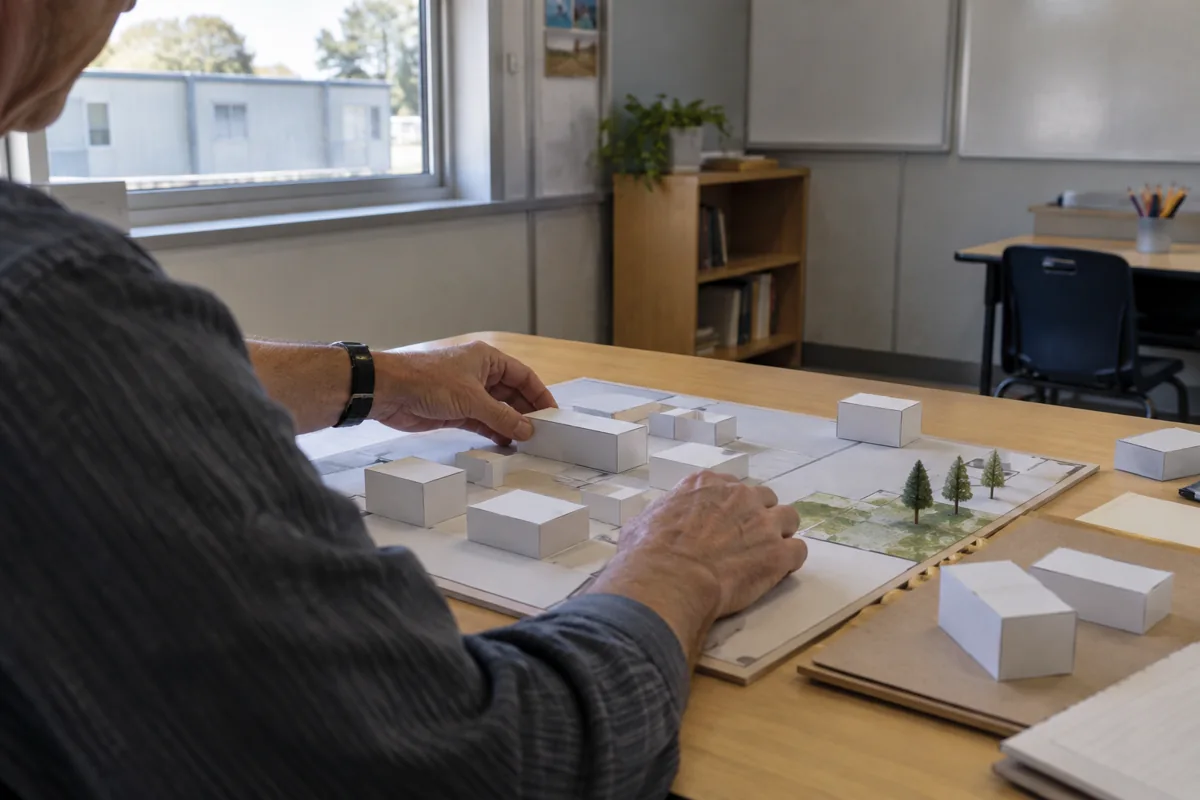
Place the shared display, maps, models, student tables, accessible positions, and instructor movement at full occupancy. Daylight control may improve projected images, but students still need enough task light for notes, model work, and safe movement.
The classroom layout resource can support general zones. Educators should define when the room needs presentation, data analysis, model demonstration, or group discussion.
Give models and instruments protected storage
Orbital models, globes, optics where used, tripods, telescope cases, charts, and adapters require different storage dimensions. Separate ready equipment from items awaiting adjustment, cleaning, or repair. Heavy cases need a retrieval route without tight turns.
Portable equipment should move through checkout, use, return, inspection, and secure closing under owner procedures. Avoid leaving cases along the perimeter during ordinary classes.
Plan outdoor observation as a separate operation
If the verified program observes outdoors, identify the controlled route, accessible viewing position, group boundary, lighting procedure, equipment staging, and return. Weather and sky conditions may cancel the activity, so the classroom still needs a useful alternative lesson.
Dark adaptation and exterior movement can conflict with ordinary campus lighting and routes. The owner and qualified designers must determine how observation is supervised without reducing safety or accessibility.
Keep instrument setup instructional rather than hurried. Cases need a clean staging surface, small components need trays, and students should have assigned viewing turns that do not surround the equipment.
After return, allow optics and cases to reach appropriate condition before storage under manufacturer guidance. Record missing parts or damage while the session is still fresh.
New Mexico and local requirements for occupancy, accessibility, exterior access, electrical systems, equipment, fire and life safety, and education facilities require project-specific confirmation by qualified professionals and authorities. No observatory or viewing-performance claim is implied.
Price the classroom before adding specialty aspirations
Daylight controls, displays, model storage, equipment cases, power, data, owner optics, exterior support, commissioning, and site work may cross contracts. Use the installed modular cost guide.
Roswell buyers can request current classroom prices with class size, teaching activities, and known equipment. Observation details can follow. Ask providers to separate room infrastructure from owner instruments and any independently designed specialty facility.