
A short staff briefing can take over an office for much longer than the meeting itself. Chairs have to move, equipment comes out and someone's desk becomes the presentation table. Sparks businesses can get modular office prices for space that handles the briefing without putting routine administration on hold. Comparing suitable provider offers could save up to 30%, particularly when the layout avoids buying two oversized rooms for work that needs a more practical arrangement.
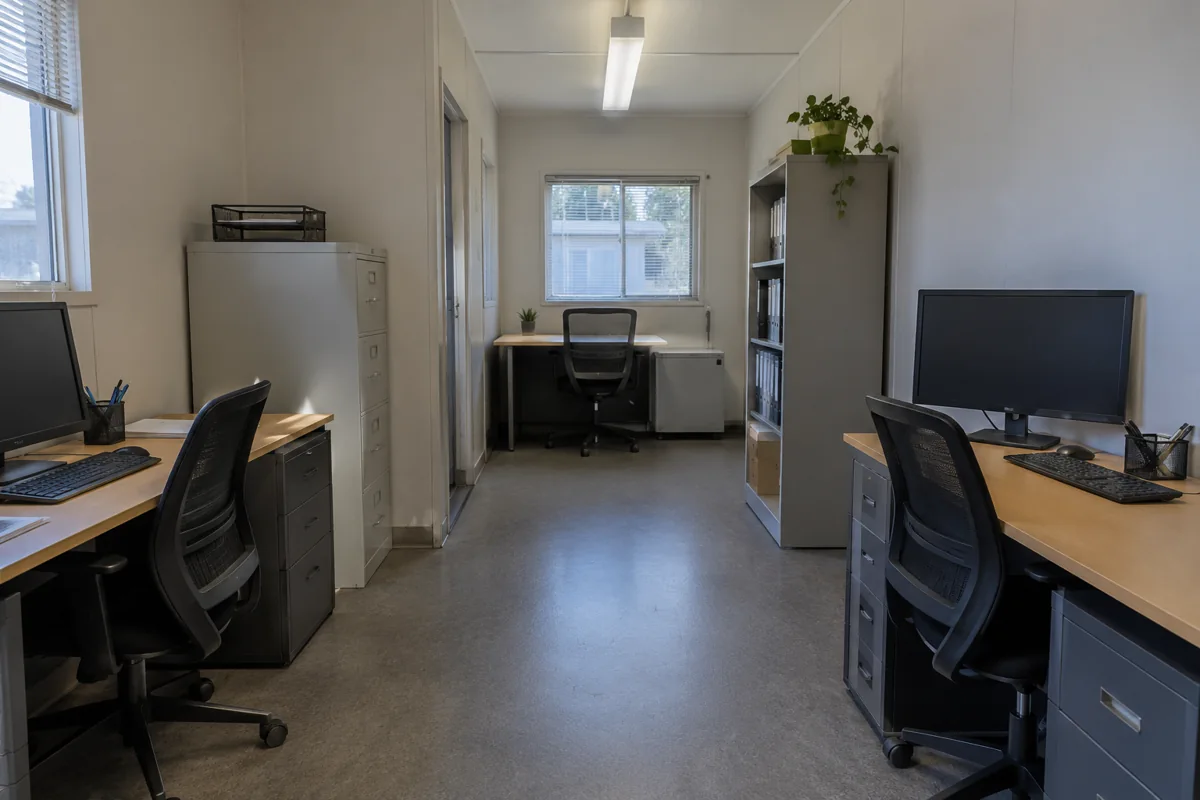
For the wider project picture, explore Nevada modular buildings alongside your office space plans.
Include the setup, not just the attendance
Count the people who normally attend together, then consider what they need to see and use. A discussion around a table differs from a presentation or an equipment demonstration. Describe the activity accurately. If it involves specialist equipment, hazards or requirements beyond ordinary office use, those need appropriate evaluation rather than an assumption that a general meeting room will suffice.
Storage deserves a place in the same discussion. Materials left across desks after every session can disrupt office work for the rest of the day. A designated place for them may be more useful than extra meeting-room floor area. Put that storage into the office layout discussion before deciding the building size.
Keep administration available while people gather
Some employees may need to answer calls or handle visitors during a briefing. Their workstations should not depend on the meeting finishing first. Consider the entrance, the route to the shared room and where late arrivals wait. A room tucked behind occupied desks can turn a simple staff gathering into repeated interruptions.
An in-plant office may be relevant if the intended location is within an existing industrial building. A separate modular office raises a different set of site and access questions. For this Nevada project, establish which arrangement you are actually pricing; the two should not be treated as interchangeable because both provide enclosed staff space.
Write the reset into the working plan
After a session, who returns the room to its next use? That small operational decision can determine whether a shared space remains useful. A room that switches from briefing to desk work needs an arrangement employees can reasonably change, with somewhere for displaced furniture and materials to go. Ask providers about proposed building changes rather than assuming any room can be altered later.
The project cost guide helps separate building and installation costs from furnishings or equipment you arrange yourself. Keep that scope clear while comparing offers. Then judge the shared room by how easily it becomes available again. If clearing it requires borrowing storage from the administrative desks, the plan has merely moved the original problem. A workable reset leaves the office ready for the next ordinary task, not waiting for someone to find somewhere to put the chairs.