
A possible future change should inform an office purchase without taking over it. Blue Springs buyers can compare modular office space for the work they know they need now, while asking clear questions about a confirmed change or a realistic option. Review office floor plans before assuming that any room can later be divided, enlarged or repurposed without difficulty.
For the wider project picture, explore Missouri modular buildings alongside your office space plans.
Distinguish a plan from a possibility
Describe the current staff functions first. Then identify which later requirements are approved, which are under discussion and which are simply ideas. Providers can respond more usefully when those distinctions remain visible. An undefined request for flexibility can lead to extra features whose purpose is uncertain, or to assumptions that important alterations will be simple.
Ask what a particular change would involve for the specific offered building. Have structural, service and intended-use questions assessed by the appropriate people. Portability or modular construction does not, on its own, establish that every proposed change is feasible or included. Keep any conditions attached to the option instead of turning a general conversation into a promise.
Make today's furnished room work on its own
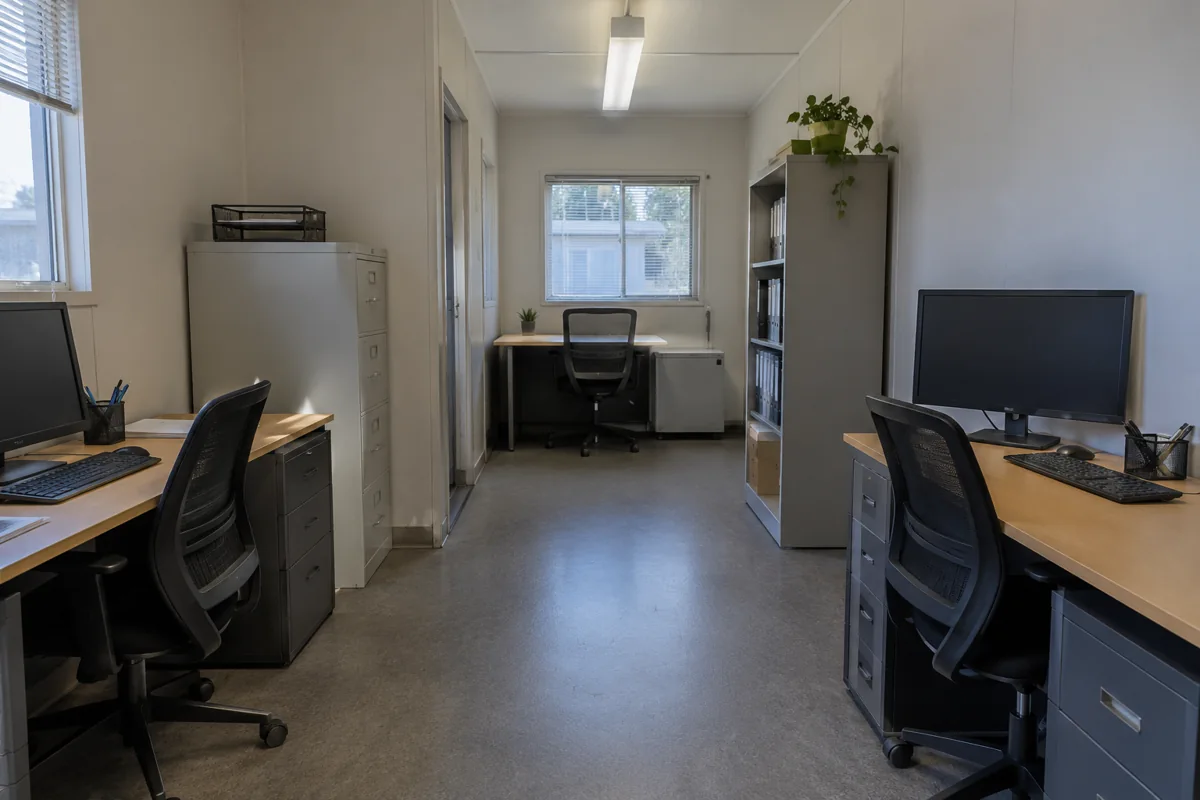
The modular office choices should be compared against actual desks, equipment, storage and circulation. A plan that reserves too much for an uncertain later use can leave the current team paying for awkward or underused space. Conversely, a known future requirement deserves to be considered before selecting fittings that would obstruct it.
For the Missouri site, review the Blue Springs installation, entrances and services in relation to the proposed use. If future work is part of the discussion, identify what assessment remains rather than assuming the initial approval covers it. The present project and a later project may have connected but distinct responsibilities.
Keep a short record of the reason for each future allowance. For example, a specific proposed extra workstation is a clearer decision than a broad wish for growth space. Record what equipment and activity would arrive with it. When plans change, the buyer can revisit that stated requirement instead of paying to preserve an option whose original purpose nobody can explain.
Price the base and the option separately
The complete cost guidance helps keep building supply and preparation clear. Ask providers to distinguish the usable current arrangement from additional work or features proposed for later needs. This makes it easier to judge whether the option earns its price without confusing it with the cost of simply opening the office.
Get Blue Springs office prices on that basis. If the possible change never occurs, the building still needs to be a sensible purchase for the work it houses. If the change becomes real, the organization has an understood question to revisit rather than an assumption to rely on. That is practical flexibility: a clear current office and a defined next decision, not a vague assurance that anything can be altered later.