
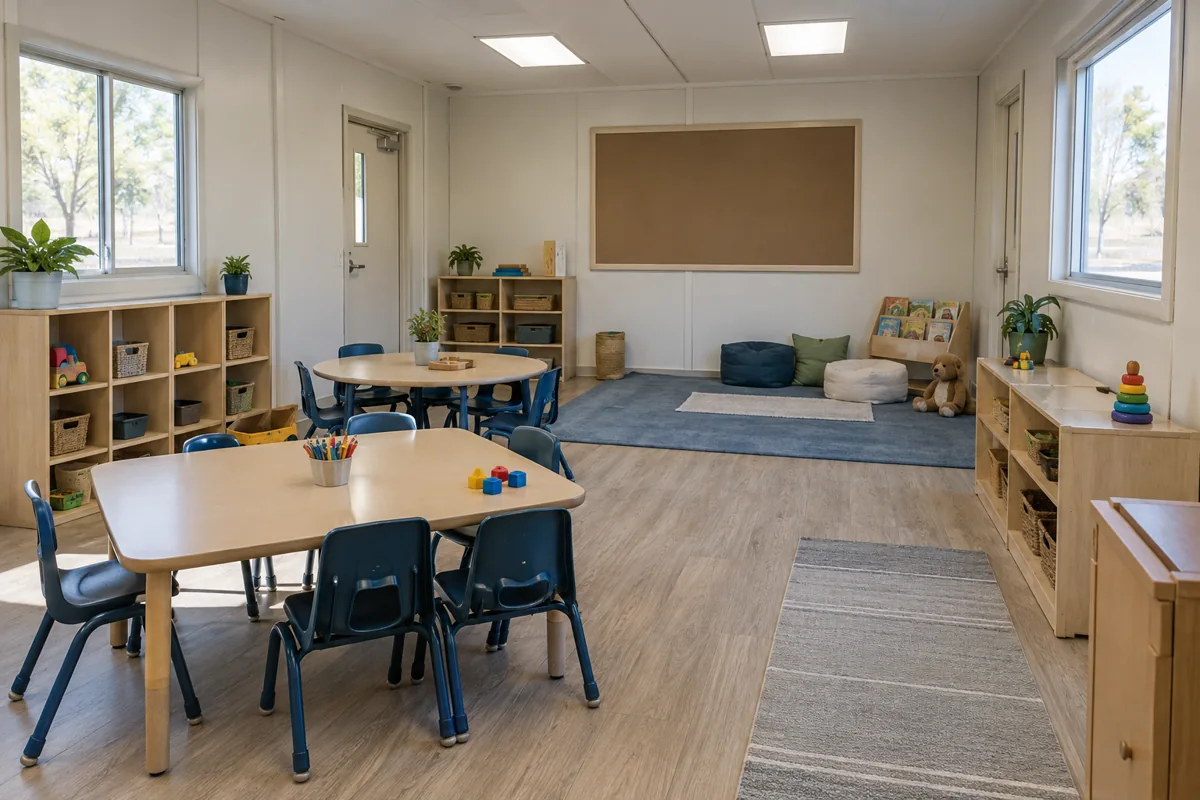
Young children use a classroom through movement, play, meals or snacks, quiet moments and repeated cleanup. A Plymouth modular classroom should make those transitions easy to supervise while keeping child-scale choices clear.
For the wider project picture, explore Minnesota modular buildings alongside your classroom space plans.
Minnesota requirements and the operator’s ages served, care model and daily practices require qualified review. The operator remains responsible for staffing, licensing, curriculum, health practices and child outcomes.
Build activity zones around staff sightlines
Place active play, books, creative work and small-group teaching so shelving does not form hidden pockets. Children should understand where one activity ends without tall barriers that prevent supervision. An educator also needs a position to support one group while scanning the rest of the room.
Use early learning classroom plans with rugs, tables, accessible choices and the real storage height shown. Test the room after toys and personal items are present, not only as an empty diagram.
Separate messy work from quiet materials
Painting, water activities and routine handwashing belong near durable finishes and supplies. Books, soft seating and rest items need protection from splash and traffic. A short travel distance matters because an educator may be guiding several children through cleanup at once.
Show where wet art dries, where smocks wait and how a spill is handled without closing the only aisle. Child-scale storage should be reachable for approved materials, while staff-only items remain controlled and distinct.
Test arrival, belongings and rest transitions
Arrival can concentrate families, coats, bags and daily information near one door. Give each belonging a predictable home and preserve space for a private staff-family exchange. Rest equipment needs clean storage that does not consume the play area between uses.
Rehearse departure when several caregivers arrive together and one child is still resting. Staff need to return belongings and share information without losing supervision of the occupied room.
Plymouth, Minnesota authorities establish property, accessibility, building, care and life-safety obligations. Toileting, food service, handwashing and outdoor access should be evaluated against the specific program and selected site.
Request prices from the whole daily routine
Share ages, group size, staffing, activity schedule, rest equipment, storage, plumbing needs, entries and property conditions. Require separate values for professional design, unit work, delivery, foundations, setting, services, exterior improvements, permits and turnover documents. The modular classroom price resource supports comparison.
Identify which cubbies, low shelving, sinks, casework and outdoor connections are included. A Plymouth modular early learning classroom request should trace arrival, play, messy work, quiet time and departure so price reflects a complete child-care setting.