
Aquaculture instruction moves from system briefing to model-tank observation, water checks, feeding simulation, records and cleanup. The room should keep dry teaching apart from a contained wet demonstration area with a short route to water service.
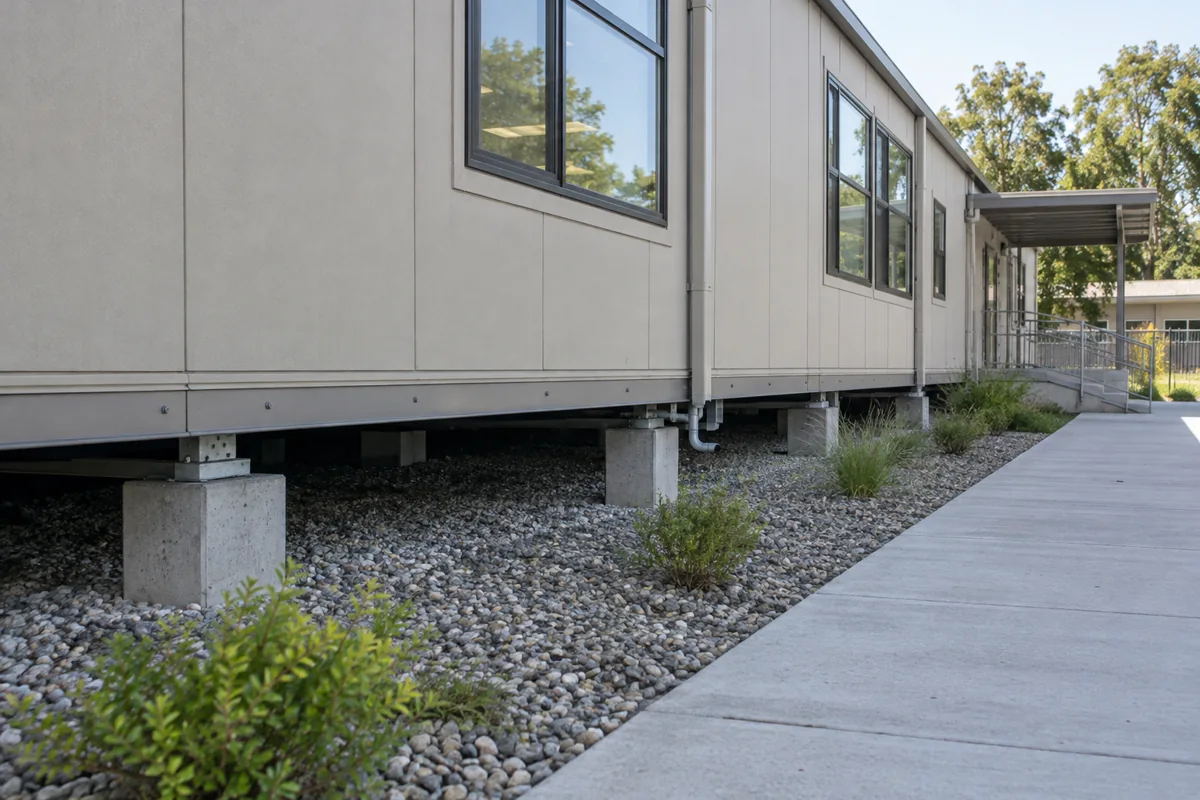
For the wider project picture, explore Maine modular buildings alongside your classroom space plans.
Define whether the program uses models, live organisms or sealed samples before requesting prices. The operator controls animal-care and biological procedures; Maine construction, accessibility, utility and life-safety requirements need qualified review.
Separate dry teaching from contained wet work
Place training tanks, meters, sample vessels, scales, feed trainers, a service sink and drying racks at actual size. Follow the lesson from briefing through observation, water checks and cleanup. Instructors need clear sightlines, while wet vessels stay away from computers and general circulation.
Compare aquaculture classroom layouts at full attendance. Electrical devices need separation from water, and records must retain the correct tank identifier. Accessible stations should support the same observation and measurement work.
Control tank models, samples and meters
Distinguish clean vessels, active test supplies, damp returns and materials awaiting approved disposal. Size racks from actual tank and meter dimensions. Frequently used clean tools can remain near the wet area; uncertain items need staff-controlled storage.
A leaking vessel, unidentified sample or failed meter remains in the wet hold area until resolved. A visible reset station lets staff reconcile meters, records and supplies before the next class, preventing a failed item from returning unnoticed.
Resolve water containment and biological limits
Animal-care limits, biological materials, water loads, electrical separation, accessibility and disposal require qualified review. Document tank weights, sink needs, drainage assumptions and the permitted biological boundary. Higher-risk work stays outside the room unless separately designed and approved.
Give every provider the same operating description and identify decisions reserved for specialists or local officials. Modular construction does not bypass those requirements. Clear limits keep the proposal focused on the intended teaching system.
Compare prices from briefing through cleanup
State the group size, tank count and weight, wet benches, meters, water service, drying space and record stations. Ask for separate design, fabrication, freight, foundation, utility, installation, permit and closeout amounts. The aquaculture classroom cost guide keeps exclusions visible.
Confirm whether furniture, tanks, meters, storage, data work and staff orientation are included. A Portland modular aquaculture classroom request should describe the complete observation and cleanup cycle so providers price the same training environment.
Drying racks should hold the full class turnover without extending into the accessible route. Include that capacity in the equipment schedule rather than treating it as movable overflow.