
A literacy center may serve a whole-class read-aloud, short tutoring groups, independent reading, book selection, assessment, and teacher preparation in the same day. A Monroe modular classroom should keep those activities connected without allowing book storage, waiting students, or carts to consume the routes between them.
For the wider project picture, explore Louisiana modular buildings alongside your classroom space plans.
Put the read-aloud where every learner can join
Place the teaching focus, group seating, accessible participation, display, instructor materials, and exit routes at realistic scale. A rug can define the area, but furniture and shelving should not trap the group or block students moving to quieter work.
The elementary classroom layout guide can support teaching zones, storage, and circulation. Actual schedules should show whether whole classes and tutoring groups ever overlap.
Let quiet reading stay visible
Independent readers benefit from lower distraction, comfortable but supportive seating, useful light, and a place for books and devices. Locate quiet positions away from check-in and returns while preserving staff oversight. Avoid deep niches that become hard to supervise.
Small-group tables need teaching surfaces and nearby materials without surrounding learners with unrelated storage. Test acoustic conditions while another activity is speaking at ordinary classroom volume.
Move books through a deliberate circulation loop
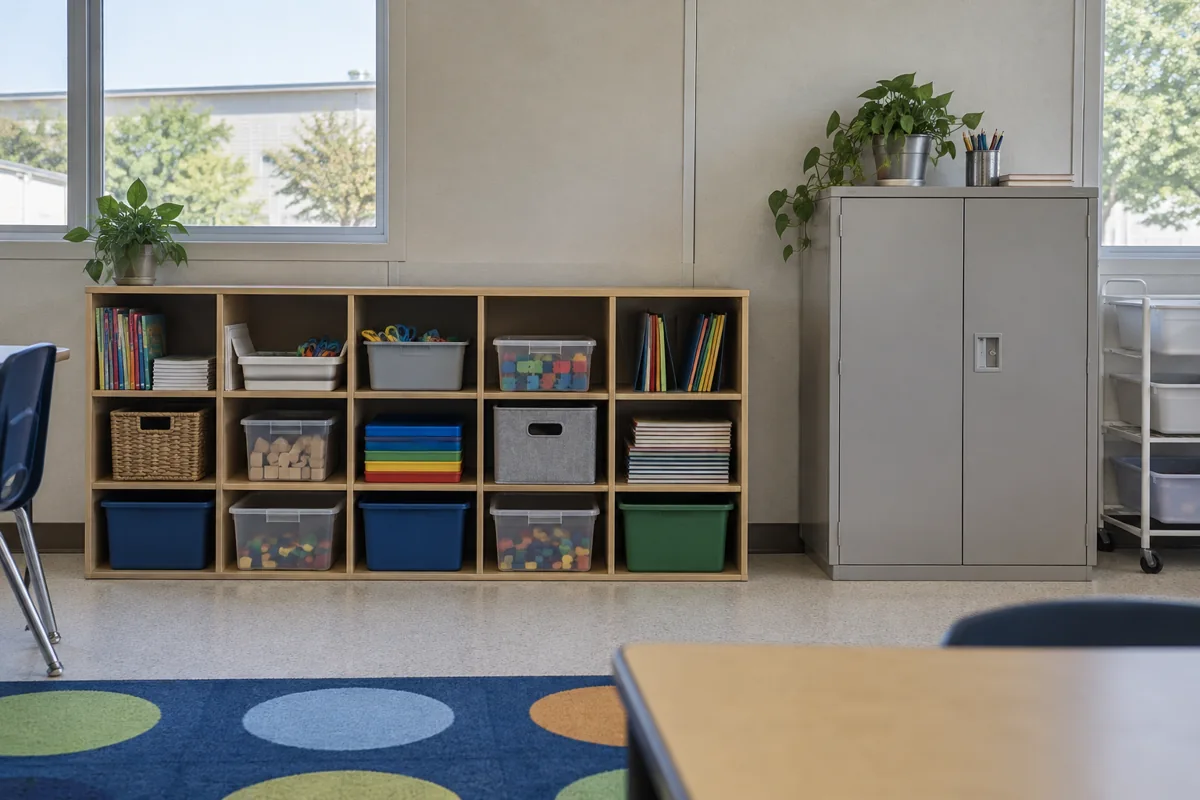
Separate browsing, returns, sorting, repair, new materials, class sets, and staff-controlled assessment resources. Low shelves may improve access and sightlines, but collection size must fit the available room rather than fill every wall. Carts require parking when they are not in use.
Book selection should not interrupt a lesson at the tutoring tables. A browsing route with a clear beginning and return point can keep students moving while staff continue small-group instruction.
Plan for materials traveling back to regular classrooms. Class-set bins, checkout records, and a pickup shelf can prevent borrowed resources from becoming anonymous stacks beside the door.
Louisiana and local requirements for occupancy, accessibility, privacy, structural and environmental design, fire and life safety, and education facilities require project-specific confirmation by qualified professionals and authorities. No literacy outcome is implied.
Price the center through a full reading schedule
Shelving, furniture, acoustic work, lighting, technology, secure assessment storage, carts, commissioning, collection moves, and site work may be included differently. Use the elementary classroom layout guide to test teaching zones and circulation.
Monroe buyers can request current classroom prices with enrollment, collection needs, and known site. A sound first decision is whether the proposed room protects simultaneous tutoring, independent reading, and book movement; collection detail can follow.
Reading groups may arrive with different materials, needs, and time limits. A small staging point for lesson folders and returned books can keep the tutoring table clear while staff move learners to independent reading. Confirm sightlines from the teaching position before adding shelves, carts, or display pieces.