
A modest Bowling Green office can be good value when it provides a complete working arrangement. Get modular office prices for the staff and activities you need to accommodate; suitable comparisons offer savings up to 30%. Keep the footprint sensible without assuming another building will automatically supply everything left out.
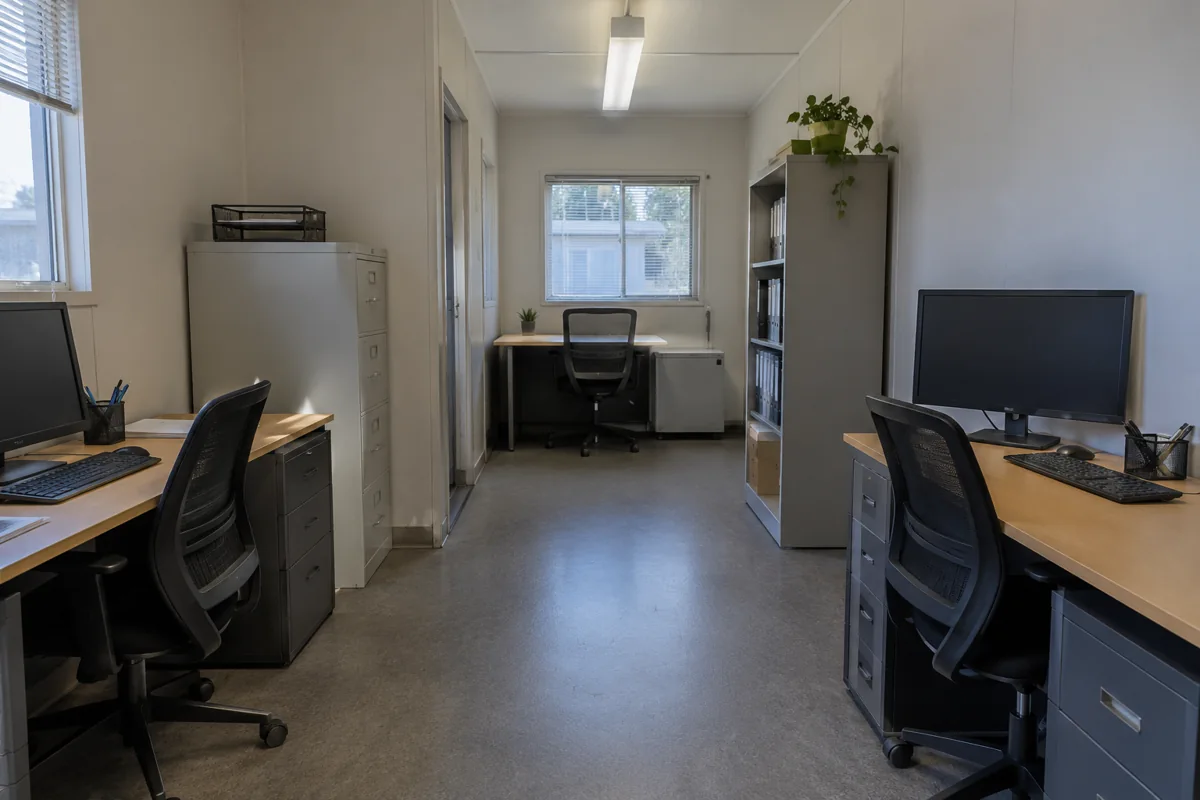
For the wider project picture, explore Kentucky modular buildings alongside your office space plans.
Describe what the office needs to do independently
List regular desks, shared equipment, records and necessary conversations. Include ordinary visitors. Decide which resources should be close at hand throughout the day and which could reasonably remain elsewhere. That distinction helps you avoid both unnecessary duplication and inconvenient omissions.
Use office layout choices with the intended contents shown. A compact plan should still allow people to use storage and move around occupied furniture. Ask providers whether a changed room distribution can retain the important functions in a modest building.
Check any reliance on existing premises
If the new office will share facilities, explain the proposed arrangement to the responsible project professionals. Have it assessed before using it to reduce the new building's scope. Something being nearby is not the same as it being suitable and available for the additional use.
Think about ordinary movements too. A resource accessed occasionally differs from one needed several times an hour. The plan should make practical sense for the staff rather than simply reducing the list of features purchased with the office.
Provide the exact Bowling Green address and available site information. Identify the parties responsible for assessing the building position and the preparation, delivery and connection work it needs. Confirm the requirements applicable to that Kentucky project.
Keep the supplied features and separate work distinct
Compare modular office buildings through their actual finishes, fittings and service provisions. Identify optional features and the furnishings your business provides. Relevant technical and access needs require qualified assessment rather than assumptions based on a room label.
The building cost guide helps organize the supplied package, related responsibilities and provisional amounts. Review exclusions closely. A smaller or simpler offer may be economical, but only if the remaining work and resources needed to use it are included in your decision.
Choose modest without choosing incomplete
For a limited requirement, examine office rental arrangements and the relevant ending commitments. For longer use, discuss available purchase or lease terms against the same useful specification. Different payment arrangements should not obscure differences in the building itself.
Before accepting the Bowling Green proposal, follow a normal day through the planned office. Essential resources should have a sensible home, shared arrangements should be understood and staff should not depend on improvised workarounds. That gives a modest building real value: enough useful space to do the job, with a clear price and a complete account of what makes it work.