
Field science does not end when students return indoors. Samples, wet gear, observations and shared instruments all need an orderly path from collection to analysis. An Ames modular classroom should be planned around that transition instead of treating it like an ordinary room with extra cabinets.
For the wider project picture, explore Iowa modular buildings alongside your classroom space plans.
Map the return from outdoor work
Place a receiving point near the entrance where teams can set down collection containers, log materials and separate wet items from notebooks or electronics. Provide room for accessible movement even when coats and boots are in use. Personal belongings should not fill the sample-handling zone.
Iowa requirements, the Ames campus and the verified science curriculum need qualified educational and safety review. The classroom layout guide can help planners compare intake, analysis and instruction zones.
A drying location for reusable gear can keep damp equipment away from teaching tables. If washing is required, define the actual materials and procedures before adding plumbing. Do not label the room a laboratory unless qualified design and approvals support its intended equipment and work.
Include one clear surface where students can compare field notes before samples are distributed.
Protect clean work from sample preparation
Students may need clear tables for identification, measurement and data entry while another group sorts field material. Separate those activities with distance, storage and a deliberate workflow. A teacher demonstration position should be visible without forcing students to gather in an aisle.
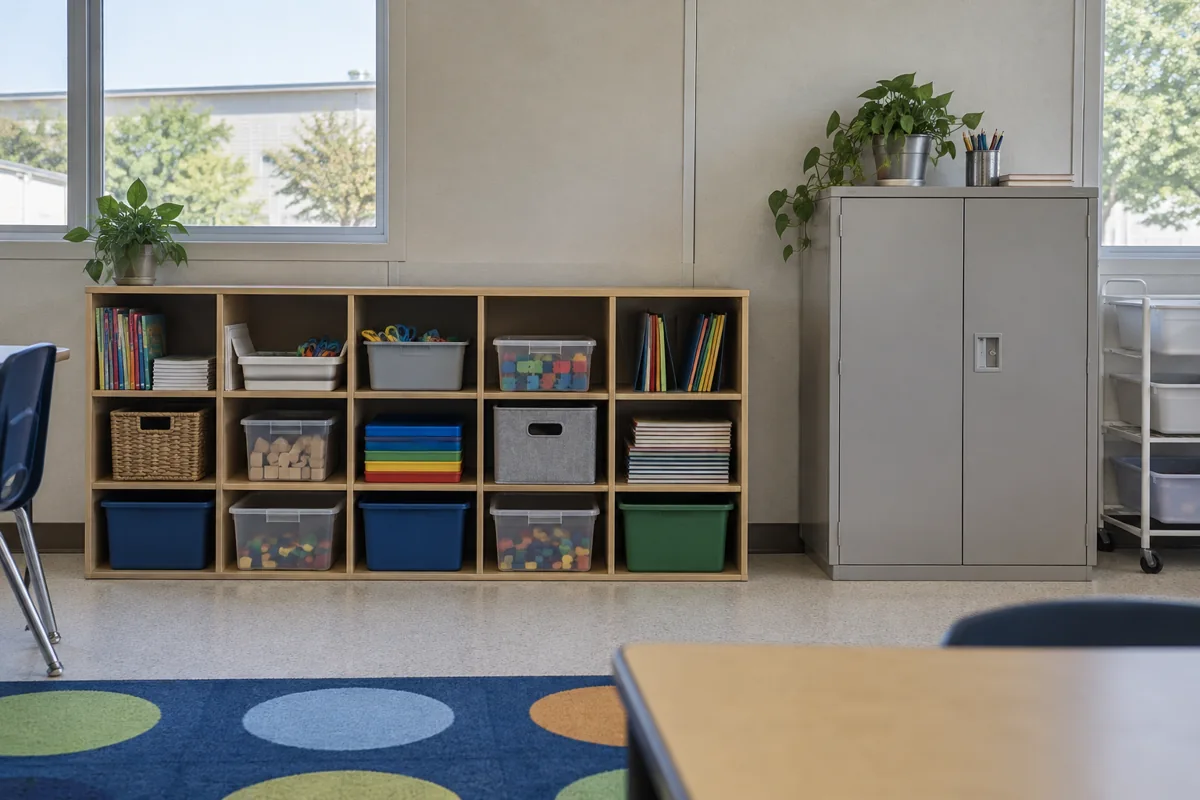
Use shallow, labeled storage for field kits so missing items are obvious. The modular classroom guide adds context for specialized education rooms without replacing project-specific design.
Assign a hold area for damaged instruments, unknown samples or equipment awaiting cleaning. Charging points need ventilation and cable control. A small imaging position can document specimens without consuming a main work surface. Waste, reusable material and anything requiring special handling need separate, policy-based routes rather than one general bin.
Compare fitted space and teaching equipment
Request itemized scope for partitions, durable finishes, lighting, power, data, any verified water service, climate systems, accessibility work and fixed storage. Microscopes, sensors, computers, field kits, safety supplies and consumables remain separate unless the proposal names them.
The complete modular cost guide can help Ames buyers include freight, foundations, utilities, site preparation, entrance work, setting and handoff. Equipment delivery, staff training and ongoing calibration need an assigned owner.
When teachers can follow a sample from outdoor collection through logging, analysis, cleanup and storage, the school can request modular classroom prices with fewer hidden assumptions. A useful field-science room protects evidence, equipment and ordinary classroom time.