
An appointment-based pantry can shorten waiting and protect privacy, but only when intake, packing and pickup do not interfere with one another. Waterloo churches should rehearse each appointment before they compare modular church building prices.
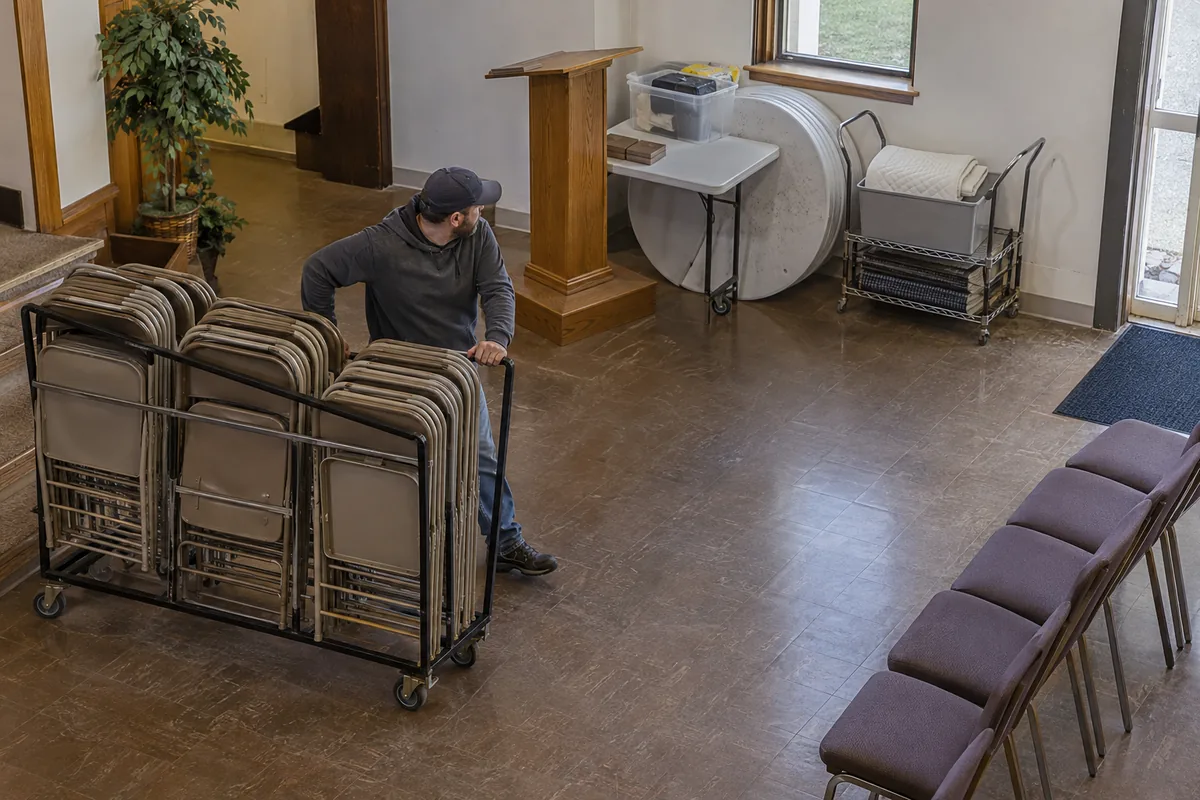
For the wider project picture, explore Iowa modular buildings alongside your church space plans.
Iowa winters also make cleared access, a protected threshold and indoor room for coats, carts and mobility devices important to a dignified visit.
Separate intake from inventory
Trace a family’s route from arrival to a private intake point, waiting and pickup. Personal information should not be discussed at the same counter where volunteers are counting goods or greeting the next appointment.
Provide seating for companions and children outside the cart aisle. Keep records and staff devices in controlled storage while general program information remains easy to reach.
Give volunteers a discreet way to call the next appointment. Names, household details and requested items should not need to be announced across the waiting space.
Qualified professionals should review accessibility, food-support conditions, ventilation, electrical and life-safety needs for the intended operation. The plan should reflect what the pantry actually distributes and how items are handled.
Plan a translator or advocate position inside the intake room when needed. The extra chair must not block the door or reduce privacy at the desk.
Organize the order from shelf to handoff
Use community ministry layouts to place reserves, fast-moving inventory, packing and completed orders. Carts need suitable aisles, turns and parking positions when not in use.
Give substitutions, damaged goods, empty boxes and waste temporary holding areas. Without those positions, exceptions quickly occupy the packing surface or exit route.
Separate order labels and count records from open goods. A modest clerical surface can help coordinators verify each handoff without setting paperwork on a packing table.
Keep walk-up and vehicle handoff separate where the property allows it. Volunteers should not move loaded carts through family waiting or stand behind reversing vehicles to complete a pickup.
Test the last appointment after volunteers begin restocking. The public route should stay clear until the final family has left, not become part of the closing work.
Compare the complete appointment cycle
Ask proposals to identify storage support, durable finishes, access hardware and loading features. The modular building cost guide helps set them beside professional services, transportation, supports, utilities, installation and closeout.
Add exterior lighting, snow-related access, drainage, delivery space, waste access and restoration. Place church-purchased shelving, tables and carts in the furnished plan.
Ask how incoming deliveries are checked before entering ready inventory. One receiving point can keep damaged or unexpected items from disrupting the aisle.
Run a delivery, private intake, packed-order handoff and final inventory check. A well-planned Waterloo building will protect family privacy, reduce repeated handling and let volunteers keep appointments moving without turning the welcome area into storage.