
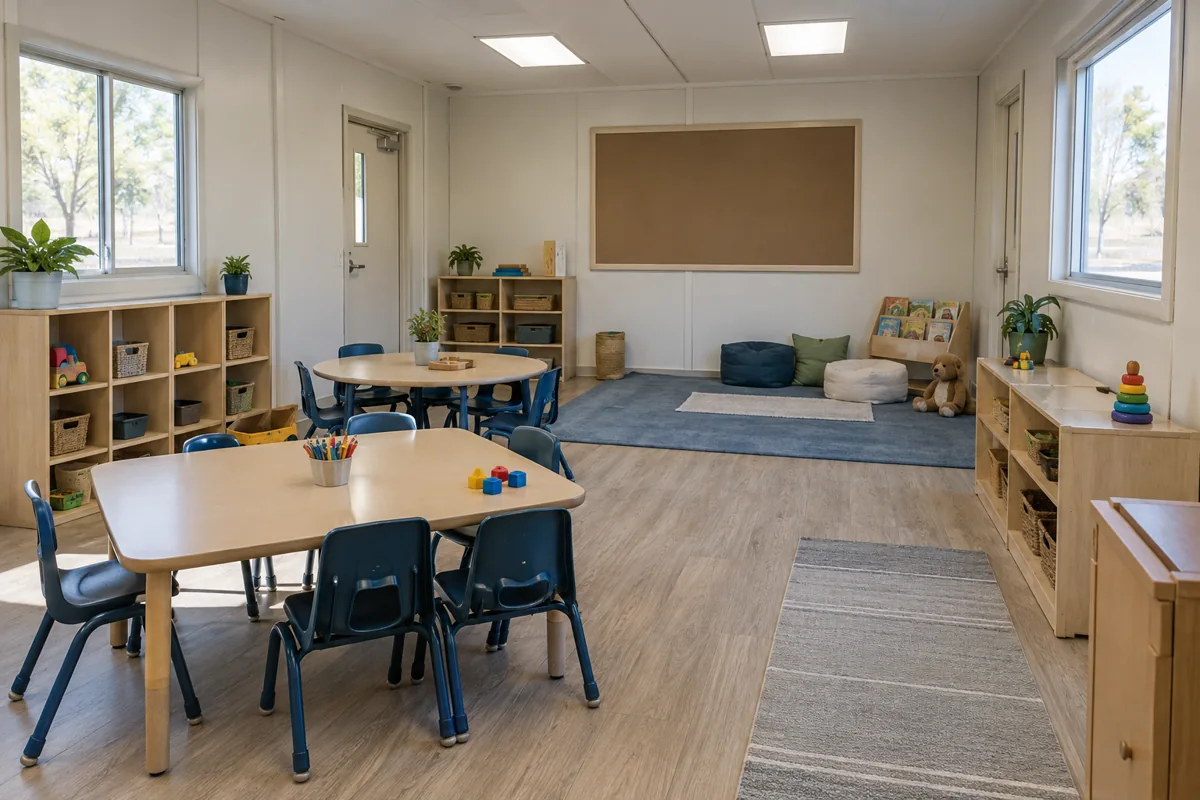
Des Plaines buyers need to decide how a remedial instruction room can support several small groups without losing teacher visibility or a quiet place for focused work. That decision shapes the layout, acoustic treatment, furniture and modular classroom price.
For the wider project picture, explore Illinois modular buildings alongside your classroom space plans.
Illinois requirements, accessibility, life-safety and any educational-program decisions need qualified review. This page does not describe a particular local school or outcome.
Plan for changing group sizes
Draw the room in at least two modes: a teacher-led table and a quieter one-to-one or individual station. Keep the adult’s observation path open, and use movable furnishings rather than tall barriers that create hidden corners. The plan should still work when a student, aide or cart enters.
Use modular classroom layouts to test group relationships, door swing and the accessible route together.
Make quiet work easy to reset
Give books, manipulatives, visual aids and assistive items a defined home near the group that uses them. Low storage can support visibility; lockable storage can protect materials that are not for open access. A clear reset surface prevents the table from becoming a permanent pile between sessions.
Acoustic products, furnishings and technology should be identified as separate scope where appropriate, not silently treated as part of a basic shell.
Compare complete Des Plaines prices
Provide the same group-size assumptions, furniture list, property facts and utility needs to each bidder. Ask for separate design, factory work, freight, supports, setting, site preparation, utilities, access work, approvals and closeout lines. Review the modular cost guide, then send the same brief via the modular classroom price request.
The right comparison explains how each number supports a flexible, observable room and what remains subject to professional review.