
Entrepreneurship education may ask students to define a problem, conduct approved research, build a simple prototype, practice budgets, work in teams, present an idea, and revise it. A Parker modular classroom should support that learning cycle without suggesting that the room produces a business, investment, revenue, or employment outcome.
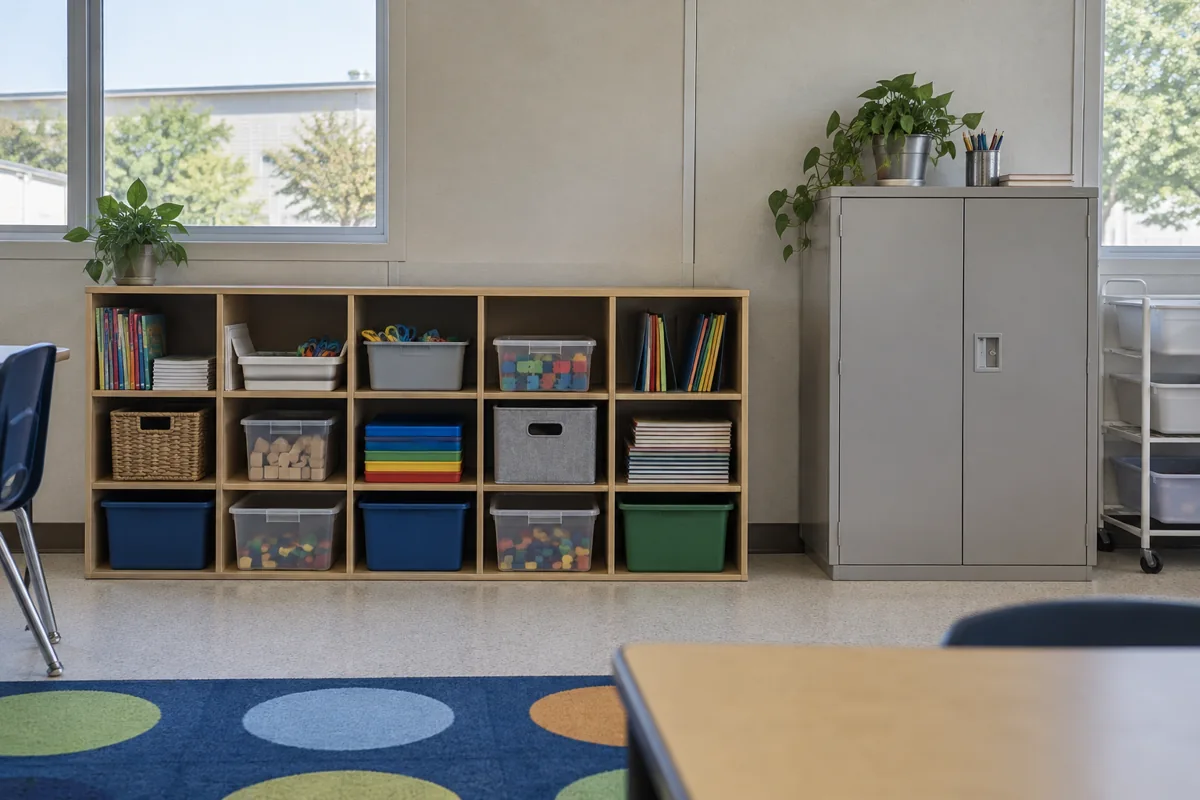
For the wider project picture, explore Colorado modular buildings alongside your classroom space plans.
Give project teams boundaries without walls
Place team tables, accessible positions, planning boards, research stations, shared displays, storage, and instructor circulation at full occupancy. Groups need enough separation to discuss different ideas while remaining part of one supervised class.
The education layout guide can support furniture and routes. The verified course should determine whether teams remain stable, rotate frequently, or use the room for individual work too.
Keep research and records under school policy
Surveys, interview notes, images, budgets, mock customer information, and digital files need owner-approved methods and access. Provide a staff review point and secure project storage. Public presentation material should remain separate from protected student records.
Technology can support research and pitching, but the room should retain writable planning space and an offline activity when devices or accounts are unavailable.
Store prototypes by stage and risk
Simple models, packaging exercises, posters, and demonstration items may remain active for weeks. Give each team a defined project bay and route to the review area. Materials or tools needing special handling require separate verified scope and professional review.
Budget exercises and customer-research practice may contain draft assumptions that should not be displayed as real claims. Provide a review point where instructors can distinguish classroom scenarios from published information.
Pitch days introduce an audience, waiting teams, presentation devices, and prototypes. Show where each group stages without listening outside another team’s review or blocking the ordinary classroom entry.
Project closeout should include file organization, material recovery, prototype disposal or return, and a final inventory. A finished presentation is not the end of the room’s work.
Colorado and local requirements for occupancy, accessibility, privacy, equipment, fire and life safety, site access, and education facilities require project-specific confirmation by qualified professionals and authorities. No commercial result is implied.
Compare prices for a complete project cycle
Flexible furniture, writable surfaces, technology, prototype storage, presentation equipment, secure records, selected tools, commissioning, and site work may cross budgets. Review them with the complete project cost guide.
Parker buyers can request current classroom prices with enrollment, project formats, and known site. Detailed tools can follow. Ask providers to show team work, a pitch, prototype holding, and clean project closeout without displacing the next class.