
Buying more office space is an expensive answer to a cupboard nobody can organize. For a Whittier business, the better starting point may be separating supplies used every day from reserve stock that rarely moves. Get modular office prices for the workspace you need, with a sensible allowance for both. A clear storage requirement helps avoid paying for extra floor area merely to hide duplicate boxes and forgotten purchases.
For the wider project picture, explore California modular buildings alongside your office space plans.
Keep the working quantity close to the task
Identify what staff regularly reach for and how much they need between replenishment checks. That small working supply belongs near the relevant activity. It does not follow that every unopened carton must sit beside it. A printer area can stay useful without becoming the receiving point for a month's worth of paper and office materials.
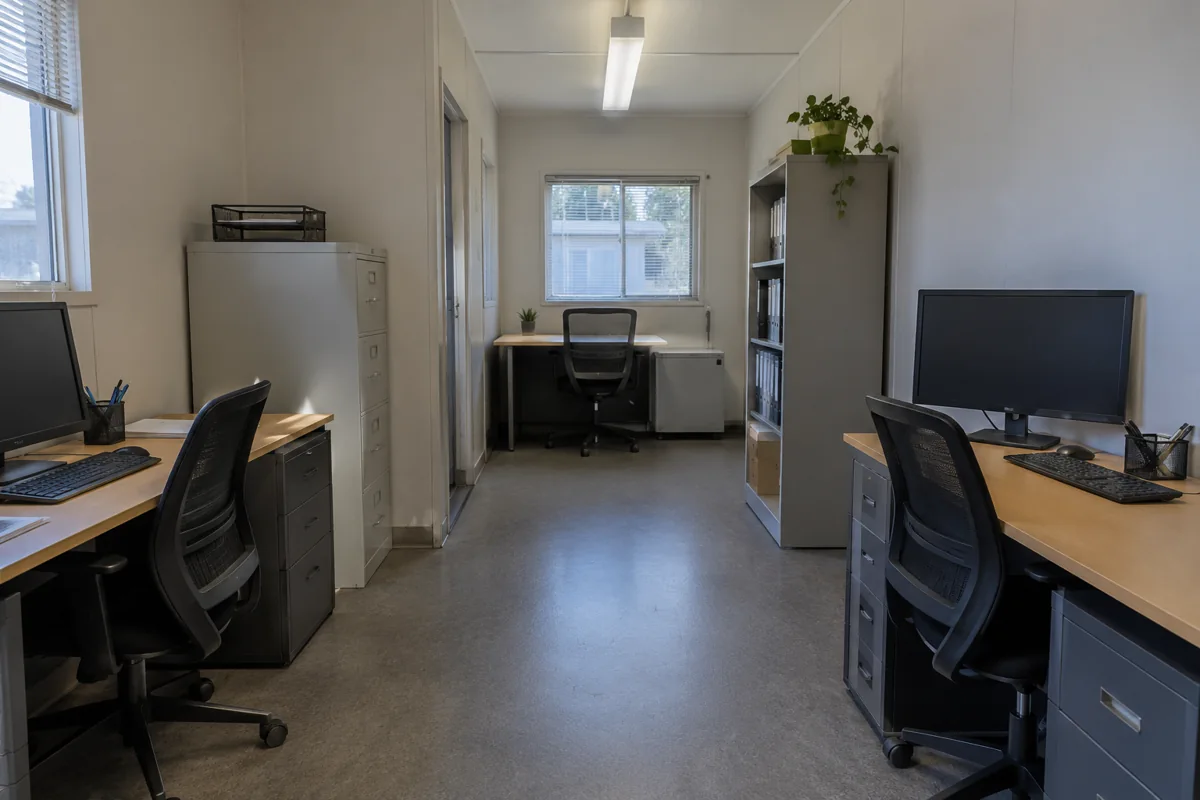
Use office floor plans to mark the intended cabinet positions. Check door swings, open drawers and the occupied workstations nearby. The cabinet's footprint is only part of the space it uses; someone must be able to find and remove items without asking a colleague to stand up.
Different materials may require different handling or storage arrangements. Tell the provider what the office will contain and seek appropriate specialist advice where needed. General office storage should not be assumed suitable for chemicals, unusual equipment or other items with requirements beyond ordinary stationery and records.
Make replenishment a small, visible job
A reserve area works only if somebody knows when to replenish the working stock and when to order more. That does not require an elaborate system. It does require the business to decide who checks supplies and where newly received items belong. Otherwise the new office can inherit the same overflowing corners as the old one.
When reviewing modular office options, separate storage that supports current work from material retained without a clear purpose. Do not discard anything simply to fit a building; follow the business's retention and disposal rules. But do not treat every existing pile as a permanent room requirement either.
Spend on useful space rather than excess stockholding
Ask for furniture and shelving inclusions to be stated clearly in the offer. The modular cost guide can help distinguish those arrangements from building supply and site expenses at the California property. Consistent requirements make it easier to compare provider offers for potential savings of up to 30%.
Try a simple test before selecting a layout: could someone locate a normal item, see whether more is available and put a delivery away without borrowing a desk? If the answer is yes, the storage is doing its job. The remaining office can then be sized for people and productive work, rather than for an expanding collection of supplies whose purpose nobody has checked.