
An art room must protect wet projects, clean paper and shared tools while giving students enough space to make work. A Santa Cruz modular classroom should be organized around the full studio cycle rather than rows of tables and a sink added later.
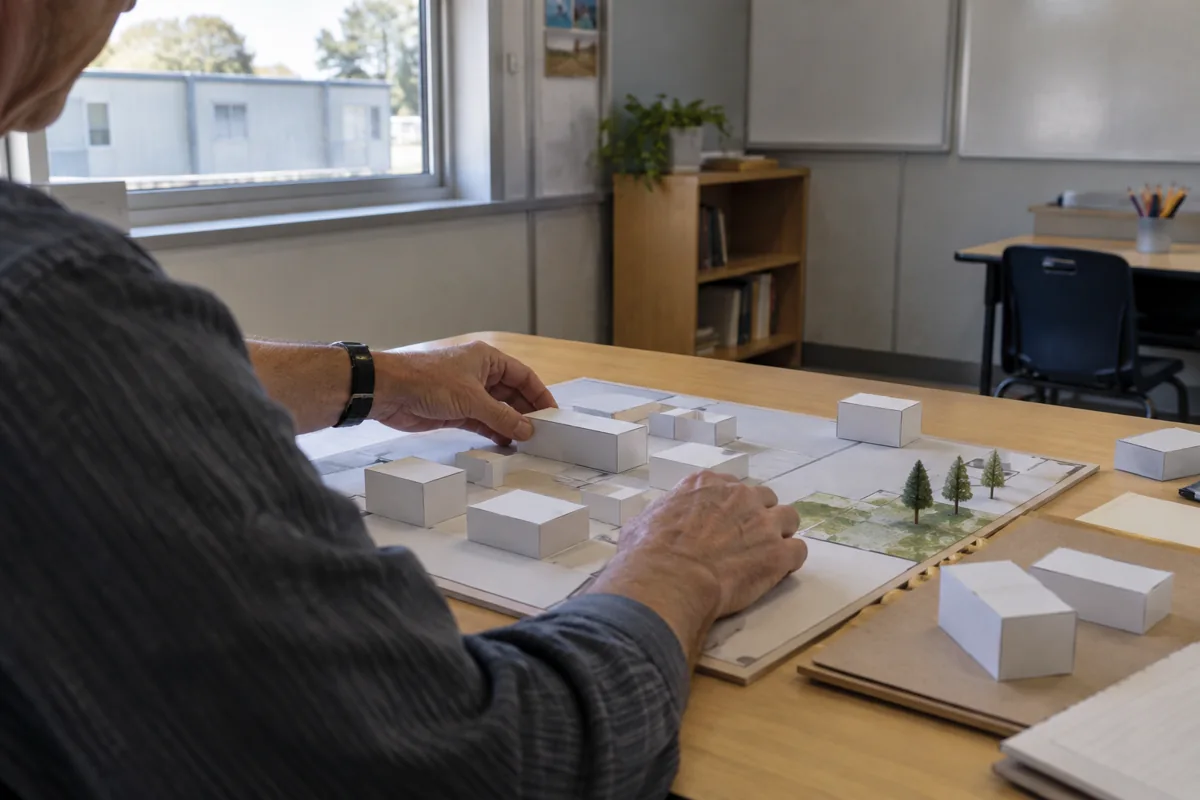
For the wider project picture, explore California modular buildings alongside your classroom space plans.
Divide clean, wet and display work
Map drawing, painting, three-dimensional work and teacher demonstrations as separate activities. Clean paper and finished pieces need protection from water and messy materials. An accessible worktable should sit within the studio community with the same reach to tools and instruction.
California requirements, the Santa Cruz campus and the intended curriculum require qualified review. The classroom layout planning guide can help educators compare open work area, storage and support relationships.
Leave clear aisles when stools, drying carts and project shelves are in use. The teaching wall should be visible without sacrificing display space. Backpacks and personal items belong outside the active studio edge.
Plan storage and cleanup by material
Use flat files, vertical racks and open shelves according to project size and drying time. Sharp or controlled tools need secure checkout. A hold area should separate damaged equipment or uncertain materials from supplies ready for class.
Any sinks, ventilation or material-handling provisions require professional design based on the actual program. The modular classroom guide gives broader context for education facilities.
Cleaning products belong in locked storage away from art supplies. Durable, washable finishes should match the school’s maintenance method. Provide a waste and recycling plan that distinguishes ordinary paper from materials requiring different handling.
Reserve a photography or documentation position where students can record finished work without clearing the demonstration counter. Display rails and boards need safe mounting and enough changing access for staff. A separate portfolio shelf can protect flat work until it returns to students or moves to an exhibition.
Price the finished studio, not an empty room
Request written inclusion for counters, cabinets, drying supports, approved plumbing, lighting, power, ventilation, climate systems, accessibility work and cleanable surfaces. Tables, stools, kilns, presses, portable racks and consumables stay separate unless named in scope.
Build the total with the installed modular cost guide, bringing transport, foundations, utilities, campus preparation, entrance work, placement and handoff into the comparison. Equipment service requirements should be identified early.
When Santa Cruz educators can follow a project from material setup through drying, storage, display and cleanup, they can compare modular classroom prices from a useful brief. The best studio protects creative work by giving every stage a practical home.