
Sustainable-design instruction can connect site and user needs, climate assumptions, energy and water concepts, material choices, durability, and tradeoffs. A Coachella modular classroom should support that studio work without presenting student concepts as engineered designs or guaranteed performance. Sources, baselines, and limits stay visible.
For the wider project picture, explore California modular buildings alongside your classroom space plans.
Give every alternative the same baseline
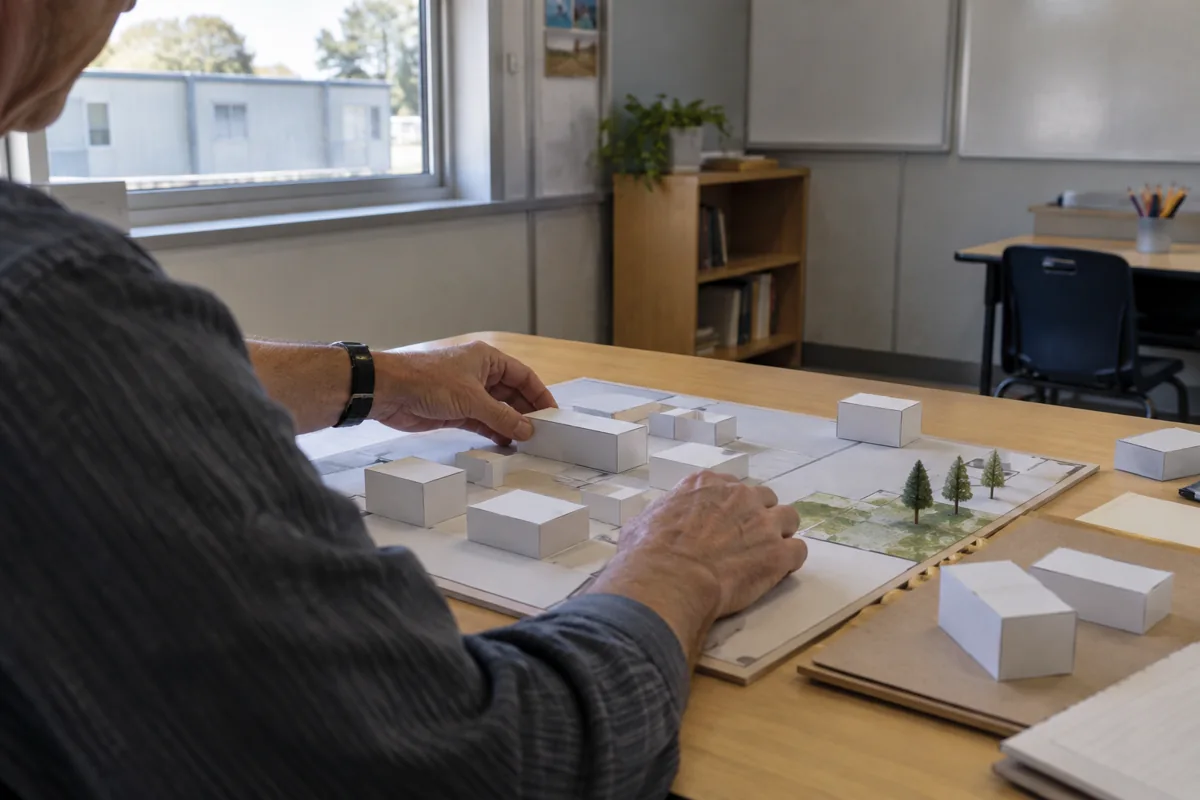
Projects need location assumptions, orientation, use, occupancy, schedule, climate source, existing condition, and stated goals. Teams should preserve those inputs when comparing options. Large tables can hold diagrams and models without blocking accessible routes.
The classroom planning guide can test site review, material study, model critique, data discussion, and presentation.
Keep product information in context
Material samples, manufacturer literature, environmental claims, and performance figures need source, date, test context, and limitations. A classroom sample does not prove suitability. Separate reference libraries from active project materials.
Owner policy governs datasets, software, product literature, accounts, files, and publication. Live testing, hazardous material, water systems, fabrication, or specialist equipment requires separate scope.
Review tradeoffs instead of one score
Energy, water, materials, access, comfort, maintenance, cost assumptions, and service life may pull in different directions. A critique surface should preserve those tensions and uncertainty. Revisions need reasons, not just a higher instructional score.
California and local requirements for occupancy, accessibility, storage, electrical systems, fire and life safety, and education facilities require project-specific confirmation by qualified professionals and authorities. No certification, savings, environmental, design, product, or academic outcome is implied.
Compare prices for the studio workflow
Plan tables, displays, model and sample storage, lighting, technology, printing, commissioning, owner software, and site work may span budgets. Review them through the installed project cost guide.
Coachella buyers can request current classroom prices with enrollment, project formats, and known technology. More detail can follow. Ask providers to distinguish classroom infrastructure from testing systems, fabrication tools, and owner software.
Closeout should return samples with their source records, protect active models, archive assumptions with each proposal, and clear temporary performance claims. A future team should not inherit a product sheet or score without the conditions that gave it meaning.
Use an assumptions register for every comparative exercise. Record weather period, occupancy, operating schedule, calculation boundary, service life, replacement, and maintenance where relevant. If one alternative changes the baseline, flag that change before critique. This keeps an apparent improvement from depending on a quieter schedule, smaller scope, or different source rather than the design decision under study.