
A phased project should solve a complete problem in its first stage. Vacaville churches comparing modular church expansion prices can begin by identifying the rooms that must open together and the future work that should remain possible without disrupting them.
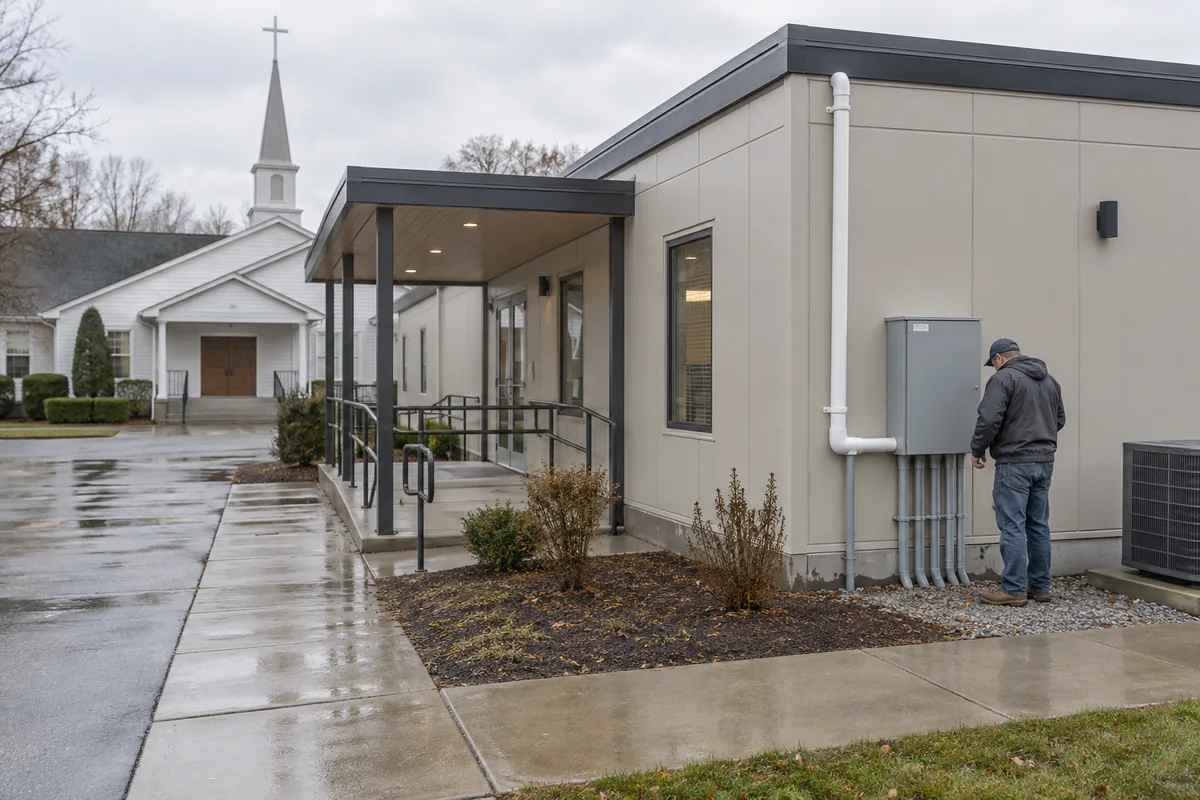
For the wider project picture, explore California modular buildings alongside your church space plans.
California modular church planning in Vacaville should let the first phase work independently while protecting a buildable path for later growth.
Give phase one its own operating logic
List the programs creating pressure today and place their support needs beside them. Classrooms may require check-in, restrooms and storage; fellowship use may require furniture handling and food-service support. Avoid a first phase that depends on rooms or utilities postponed to an uncertain future date.
Use modular church layout ideas to test several relationships, then document the selected room program and why it works. That record helps providers price the same phase instead of making different assumptions about future space.
Include a first-phase opening checklist in the brief. Furniture, technology, signage, keys, storage and staff procedures can determine whether new rooms are usable on day one. Treating them as operational scope keeps a physically complete building from opening with avoidable workarounds.
Reserve future connections that can actually be built
Mark where later modules could join, how circulation might extend and whether utilities need capacity or access for expansion. Keep parking, accessible routes and installation paths from occupying the same space. A future arrow on a drawing is useful only after the site team confirms the route is practical.
If renovation or construction creates a temporary capacity problem, compare the portable building rental path with adding permanent first-phase rooms. Rental terms, site work, removal and restoration need the same responsibility discipline as a purchase.
Consider what later work would force the first phase to close. A connection that can be built from outside, or a corridor that extends without disturbing occupied classrooms, may justify early planning expense. Ask providers to explain how their concept handles that transition.
Carry both phases in the cost conversation
The first budget should show building scope, design, freight, foundations or supports, utilities, entrances, installation and closeout. It should also identify any first-stage work performed solely to prepare for expansion. The project cost planning guide helps distinguish present cost from later assumptions.
Qualified professionals and local authorities must verify property, code and permit requirements. The best Vacaville phase-one plan will operate confidently on its own while leaving a documented, realistic path for the next ministry need.
Keep phase-two ideas separate from phase-one commitments in the proposal. The committee should know which future accommodations are included now, which are only design assumptions and which will require new engineering or site work when growth actually arrives.