
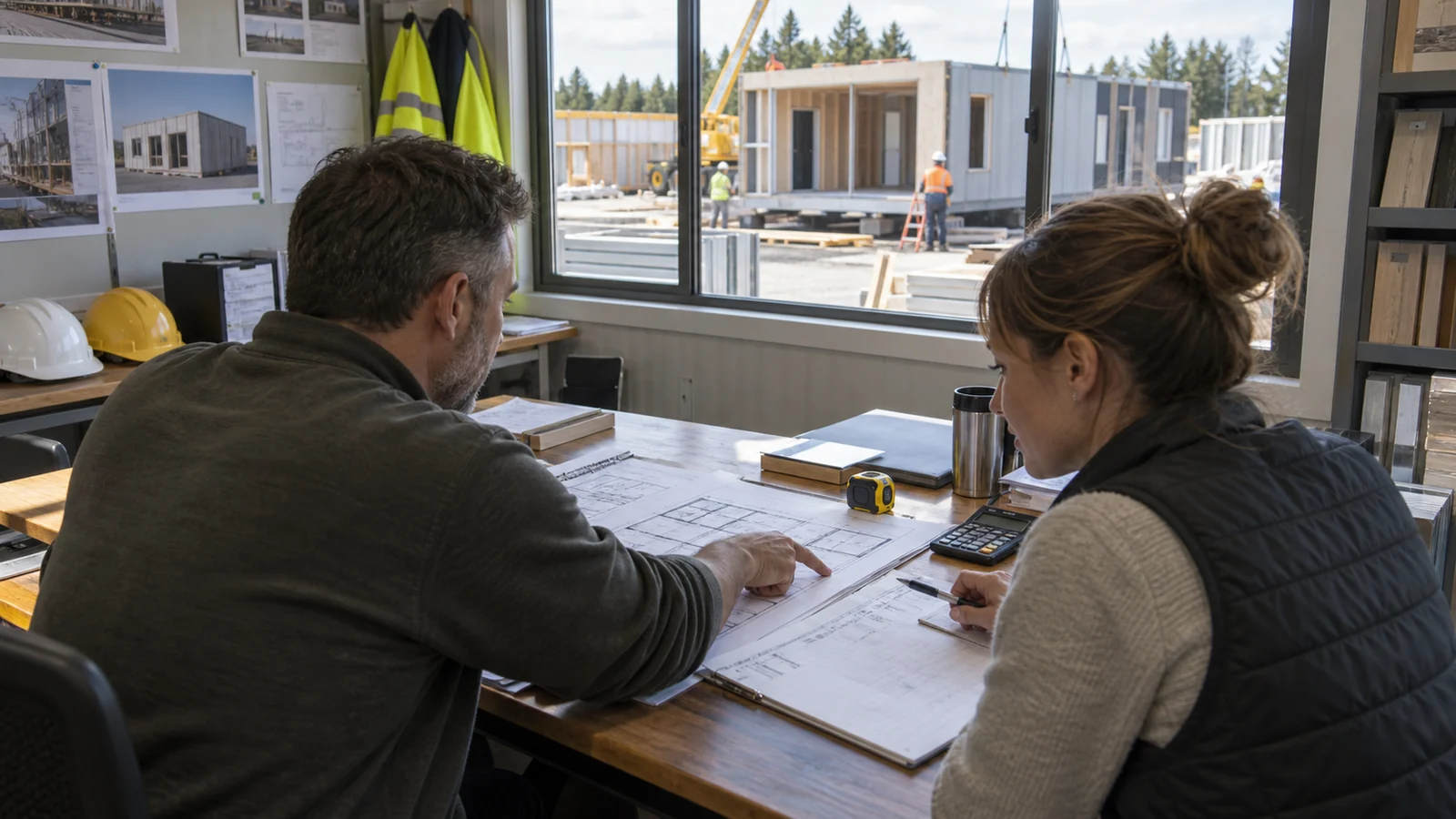
A modular building quote is only useful when buyers can see what is included, who owns each task and which assumptions could change the final cost. Two proposals with similar building prices may carry very different site work, delivery, design and closeout responsibilities.
Normalize the scope before choosing a supplier. The goal is not to force every company into the same delivery model; it is to make the differences visible enough to value.
Modular building quote checklist
Use this modular building quote checklist to give each supplier the same project brief and to record where their proposed scope differs.
1. Building use and occupancy
- Primary use, operating hours and expected duration
- Staff, visitor and peak occupancy
- Rooms, adjacencies, storage and equipment
- Accessibility and special operating requirements
- Temporary, relocatable or permanent intent
2. Building and finish scope
Ask suppliers to identify module size and count, structural system, exterior finish, roof, insulation, windows, doors, interior partitions, ceilings, flooring, casework and specified equipment. Require allowances to be labeled and tied to a selection deadline.
Use the modular design library to communicate workflow and room relationships before finishes dominate the discussion.
3. Design, permits and approvals
Record who supplies architectural and engineering documents, site surveys, civil work, permit applications, plan revisions and responses to authorities. Factory review does not eliminate local site, utility, accessibility, fire or occupancy requirements. The permit and inspection guide helps assign the work clearly.
4. Delivery and installation
- Transportation origin, distance and route assumptions
- Permits, escorts and delivery scheduling
- Crane or placement equipment
- Module staging, setting, connection and weather closure
- Travel, mobilization and delay conditions
5. Site work and utilities
Separate grading, drainage, foundations, anchoring, utility runs, final connections, stairs, ramps, walks, fire protection, landscaping and site restoration. Identify the limits of each contractor’s work and the information needed to finalize allowances.
6. Schedule and milestones
Compare the date assumptions behind design, approvals, fabrication, site work, delivery, installation, inspection and occupancy. Ask what decisions must be made to protect each milestone and how owner or authority delays are handled.
7. Closeout, warranty and future changes
Request warranty scope, exclusions, response process, training, manuals, record drawings and final approvals. For rentals or relocatable buildings, include return notice, damage standards, disconnection, removal and restoration.
8. Price structure and exclusions
Compare base price, alternates, allowances, taxes, financing or rental terms, escalation, payment milestones and exclusions. Avoid ranking proposals until the most important assumptions are either resolved or carried consistently.
Frequently asked questions
Should the lowest modular building quote win?
Not automatically. Compare included scope, assumptions, schedule, site responsibility, quality, support and end-of-project obligations before judging price.
What information makes a quote more accurate?
A defined use, room program, occupancy, site plan, utility information, desired schedule and responsibility matrix reduce guesswork.
How should allowances be compared?
Confirm what each allowance covers, the quantity or quality assumed, who controls the selection and what happens if actual cost differs.
Make every proposal answer the same project. Work through ModTech’s cost and planning guide, then request modular building options with a consistent scope.