
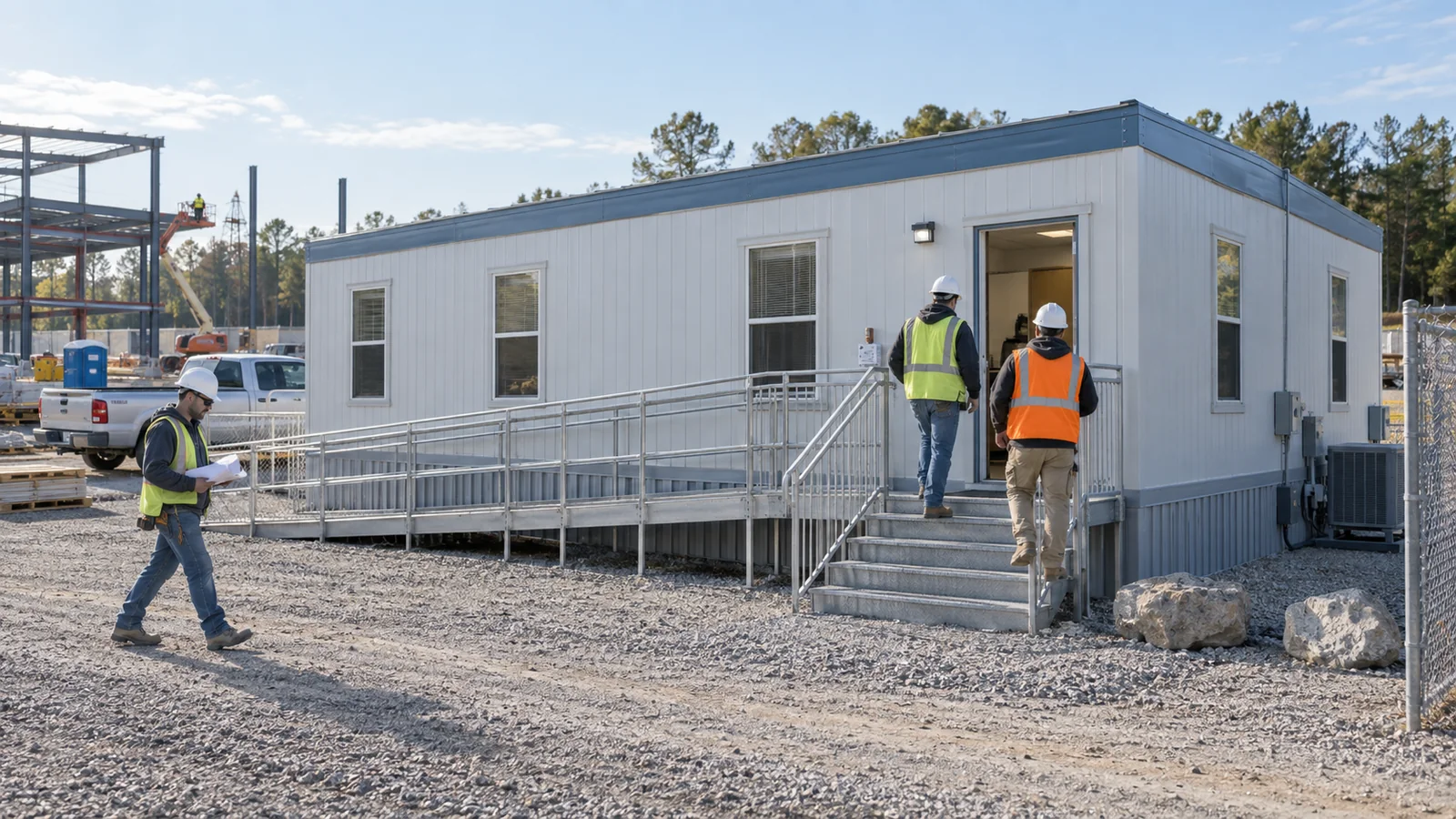
A modular building rental quote is shaped by more than the monthly rate. Size, rental term, floor plan, code requirements, delivery distance, site work and return conditions all influence the real project cost. Buyers get a clearer comparison when every supplier prices the same operating need and the same division of responsibility.
Start with the date the space must be ready, the number of people using it and the work that will happen inside. Those three facts narrow the size, layout and level of finish before the rental conversation turns into a pile of options.
What changes a modular building rental rate?
A useful modular building rental comparison separates the recurring building charge from delivery, installation, site work and end-of-term costs. Ask for each line to be visible instead of accepting one blended number.
- Building size and module count: more space generally means more sections to transport, set and connect.
- Rental term: a short need, a one-year requirement and a multi-year occupancy may be priced differently.
- Floor plan: open office space is different from private rooms, classrooms, clinics or specialized work areas.
- Finish and equipment: restrooms, casework, upgraded HVAC, data, security and accessibility features affect scope.
- Location and route: distance, permits, escorts, road access and delivery timing can change mobilization.
- Site readiness: foundations, utility connections, stairs, ramps, walks and drainage may sit outside the base rental.
Size the building around people and work
Square footage is only a starting point. Document workstations, meeting rooms, storage, restrooms, circulation, equipment and accessibility needs. A smaller building with a poor layout can feel crowded while a well-planned footprint uses fewer modules effectively.
Review the available modular office floor plans as planning examples, then adjust the program to the actual staff, visitors and workflow.
Match the term to the real need
Define the expected occupancy date and the event that ends the requirement: completion of a renovation, growth into permanent space, a school construction phase or a temporary contract. Add schedule contingency instead of assuming the building can disappear the day the underlying project is supposed to end.
If the need may continue for several years, compare rental with purchase and financing using the lease, finance or buy guide. Include future relocation or resale plans in that decision.
Separate one-time and recurring charges
| Cost group | Items to request |
|---|---|
| Recurring | Building rental, specified equipment and any recurring service |
| Delivery and set | Transportation, permits, escorts, crane or set equipment, assembly and weather closure |
| Site work | Foundations, grading, utility runs, stairs, ramps, walks, tie-downs and restoration |
| Closeout | Disconnects, removal, return freight, damage standards and site restoration |
Ask what happens at the end
Return conditions deserve the same attention as move-in. Clarify notice periods, holdover rates, normal wear, repair responsibility, utility disconnection, removal scheduling and restoration. If the building stays longer than planned, understand how the agreement continues.
Frequently asked questions
Is delivery included in a modular building rental rate?
Do not assume it is. Ask suppliers to separate recurring rent from delivery, installation, site work and removal so proposals can be compared fairly.
How long should the rental term be?
Base it on the operating need and a realistic project schedule. Include contingency for approvals, construction or transition work that could extend occupancy.
Can a rental building be customized?
Available layouts and modifications depend on inventory, code requirements, term and supplier. Describe essential features early so customization can be evaluated before the quote is finalized.
Compare the full occupancy cost, not only the monthly line. Use ModTech’s cost and planning guide, then request a modular building quote based on a consistent project scope.