
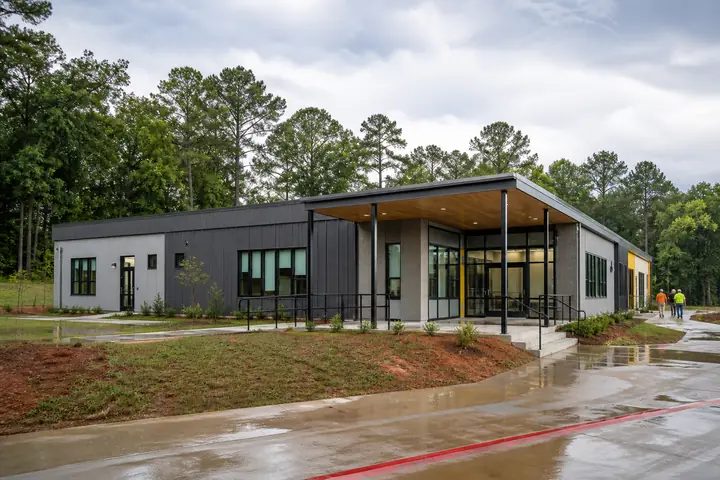
Modular construction can move factory production and site work forward at the same time. That advantage is real only when decisions, approvals and property preparation stay aligned. A Franklin buyer should evaluate the entire path to usable space—not treat the manufacturing period as the project schedule.
Throughout Tennessee, project timing varies with the chosen use, property and responsible parties. A credible Franklin schedule therefore has to be built from those project facts and the reviews actually required.
Start the clock with decisions, not fabrication
Before a production slot matters, the team must settle occupancy, room needs, equipment, utilities, accessibility, finish level and site placement. Late changes to plumbing, entrances or room count can affect design and site work together. Create a decision log that names the approver and due date for each item, then identify which later activities depend on it.
Use modular building design options to make those discussions concrete. Test a plan with furniture, storage and circulation shown, and confirm that the arrangement supports a busy day rather than an empty drawing. Project-specific design and approval requirements should be verified with qualified professionals and the appropriate authorities.
Coordinate the two production tracks
The factory and the property need separate task lists tied to shared milestones. On the site side, those tasks may include investigation, clearing, grading, drainage, foundations, utility work and access preparation. The building side may include design completion, material decisions, manufacturing, inspection and transportation planning. Neither track should assume the other will simply be ready.
Assign ownership for each connection point. Who confirms foundation information? Who releases the final utility locations? Who verifies the delivery route shortly before shipment? Who coordinates entrance equipment and final inspections? The modular project planning guide is useful for finding responsibilities that affect both cost and timing.
Select temporary or permanent space deliberately
If the need has a firm end date, portable building rentals may offer a better match than long-term ownership. The schedule must then include lease approval, accessories, delivery, setup, extensions, removal and restoration. If the use is expected to continue, a purchase or financed solution may support different finishes, foundations and expansion choices.
Ask every supplier for a milestone schedule with assumptions and owner dependencies, not just a delivery statement. Place internal approvals, site work and closeout on the same page. Then request current building prices with the target date and decision status clearly described. A believable Franklin schedule is one that makes unfinished work visible early—while the team can still solve it without sacrificing the building’s function.