
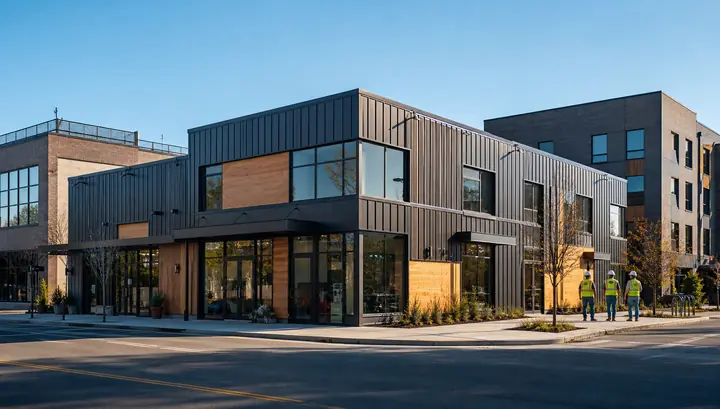
Recreation programs often ask one entrance to handle registration questions, late arrivals, equipment and family waiting. A Lincoln modular building can bring order to that first contact when the layout distinguishes public help from program operations.
California context shapes the property review. The recreation operator must define participation, supervision, equipment and emergency practices for each activity.
Give families an obvious first stop
Position registration where staff can greet arrivals without requiring personal details to be discussed across the room. Provide a visible waiting area that does not consume the accessible path or field-side exit. A small private office helps with accommodations, payment questions or a participant concern.
Review modular building plans with strollers, mobility devices, benches and real queue lengths included. Information boards should carry current schedules and direct people to the correct activity without turning the counter into a repeated wayfinding station.
Keep equipment and participant movement separate
Place issue storage after check-in and give returned items a different receiving point. Staff should be able to identify equipment ready for use, awaiting inspection or assigned to a group. The operator must set maintenance, sanitation and custody procedures appropriate to the items.
Field-side access should connect to the established supervised movement area. Qualified professionals need to evaluate occupancy, accessibility, utilities, structural conditions and life safety. Lincoln, California and other authorities with responsibility determine requirements for the property and building.
Rehearse a period when one group returns equipment as another arrives late. Staff should handle both without sending families behind the counter or stacking bins in the exit. Add a clear lost-item holding point so clothing and personal belongings do not become an unmanaged pile beside registration.
Price a complete activity-day hub
Share peak attendance, staffing, operating hours, equipment quantities, technology, security divisions and site conditions. Require a written allocation for professional services, unit construction, transportation, supports, setting, utility work, entrances, permits and closeout. The modular project cost guide makes those divisions easier to compare.
A Lincoln modular recreation building request should ask respondents to follow a participant from registration to equipment handoff and supervised departure. Look for a plan that keeps public questions visible while protecting staff work.
The right choice will make the program easier to understand and reduce predictable congestion at transition times. A clear installed price matters because access features, exterior connections and utilities are part of the participant experience, not incidental work to discover after selection.