
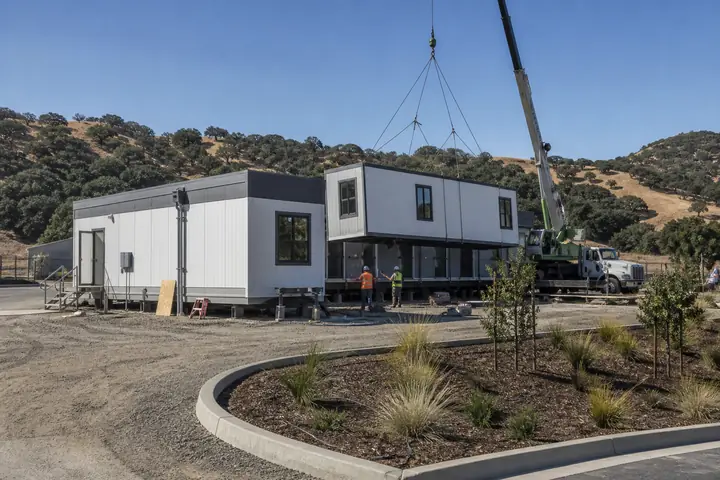
A community distribution program serves people while moving products in another direction. When both routes share one doorway, check-in, privacy, volunteer work and deliveries compete. A Covina modular building should make the service sequence understandable without turning the public area into a warehouse aisle.
California context frames the project, while the program’s actual inventory, appointment method and property determine the plan.
Make check-in calm and discreet
Visitors should know where to begin and where to wait without hearing another person’s details. Provide a private assistance room for longer conversations or exceptions. Keep forms, records and staff screens out of casual view.
Review commercial modular layouts with tables, carts, seating and shelves shown. A pickup counter needs enough surface for an orderly handoff but should not expose bulk storage. Companion space and mobility devices must fit without narrowing circulation.
Plan for someone who arrives early, misses an appointment or needs extra help. Staff should have a consistent response that does not stop the routine line.
Give volunteers and deliveries a separate rhythm
Create a product route from receiving through inspection, storage, packing and pickup. Distinguish ready items from donations or goods awaiting review. Volunteers need orientation, safe work surfaces and a place for personal belongings.
Storage capacity, food or material requirements, lifting and equipment needs must be confirmed for the actual program by qualified professionals. Covina and California authorities should resolve property, occupancy and building requirements.
Run a delivery during public hours on the plan. If pallets, carts or boxes cross waiting, change the timing or route before opening.
Consider how product choices are explained. If visitors select among sizes or types, present the information where they can review it without holding the pickup line. Keep display samples clean and clearly separate from distributable inventory. Staff should have a consistent way to correct an unavailable item or substitution, protecting both dignity and stock accuracy during a busy period.
Request prices for the entire service cycle
Give providers inventory dimensions, peak visitors, volunteer counts, technology and furniture responsibilities. Have them allocate shipping, base construction, placement, service hookups, entry work, alarms, authorizations and final handoff. Use the installed modular project guide to compare those boundaries.
When you compare Covina modular building prices, ask how a visitor and a delivery move through the building at the same time. A strong response will protect dignity, inventory control and staff work without inventing a local program or outcome.
After a distribution day, return carts and supplies to marked locations and review any recurring congestion. This routine keeps the next service period from inheriting yesterday’s temporary arrangements.