
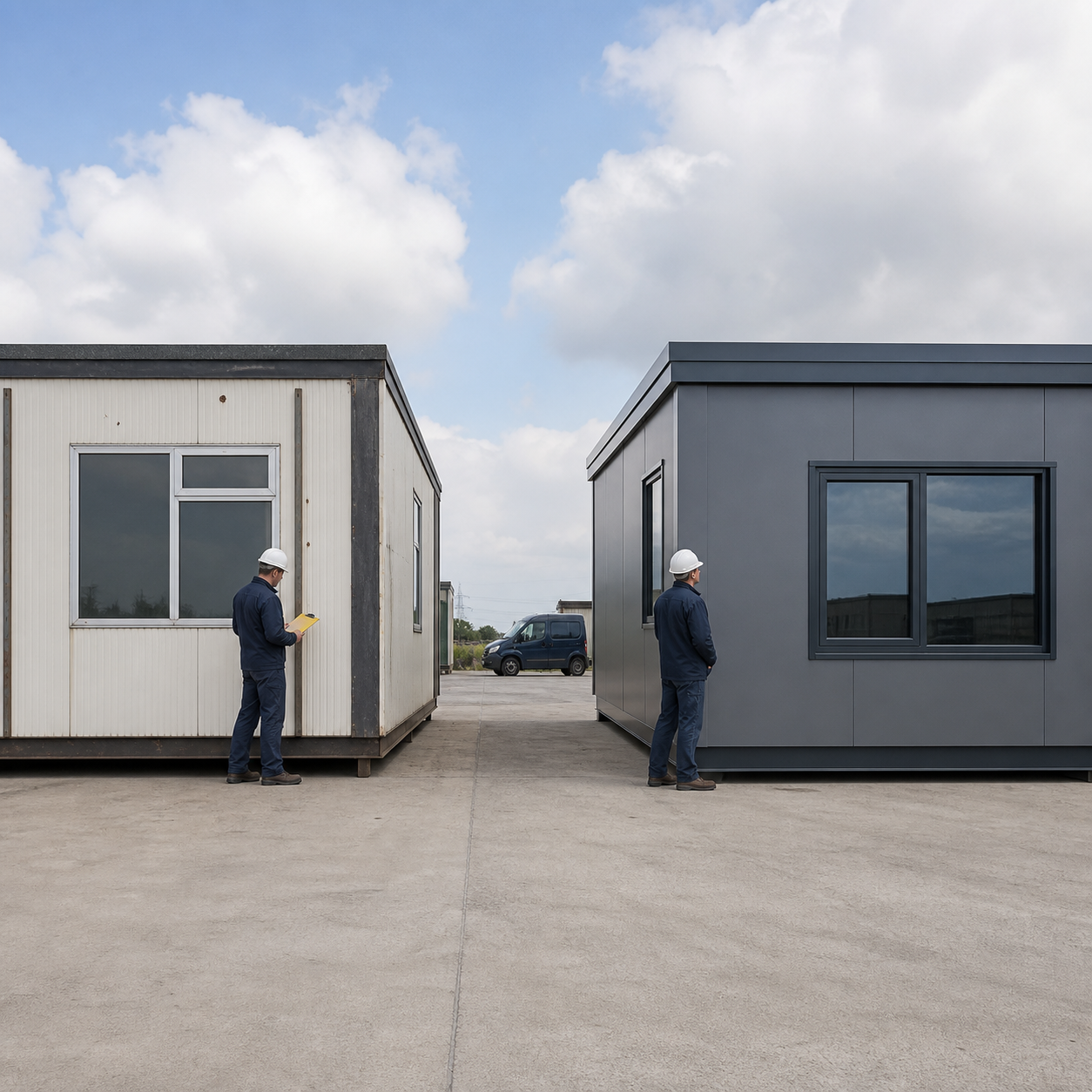
Choose a new or used modular building by fit, condition, approval path, customization, delivery and total installed cost—not purchase price alone.
When a used building can make sense
A used modular building may fit a standard office, classroom or temporary need when an available unit closely matches the room program and can be delivered to the property. The strongest candidate needs limited reconfiguration, has useful records and can be evaluated for the new site and occupancy.
Availability can also support buyers who value a pre-existing building more than a fully customized appearance. However, “in stock” does not mean immediately occupiable. Transport, site work, foundations, utilities, approvals, repairs and installation still require planning.
When new construction is the better fit
New modular construction allows the building to be designed around the intended use, module layout, exterior, finishes, equipment and building systems. It is often the stronger path for specialized medical, food-service, laboratory or public work, as well as permanent projects where architecture and long-term performance matter.
Review ModTech’s modular building projects to see how building use changes the planning problem. A new design still needs disciplined early decisions; customization without a firm program can slow design and raise scope.
Inspect a used building as a system
Ask for available drawings, specifications, prior use, age, maintenance history and repair information. Have the appropriate professionals assess the structure, roof, envelope, floors, windows, doors, HVAC, electrical, plumbing and visible signs of water or transport damage.
- Module dimensions and transportability
- Structural criteria for the new location
- Condition of finishes and building systems
- Room layout and accessible circulation
- Documentation available for review
- Cost and feasibility of required changes
Confirm the new approval path
A prior approval does not automatically authorize a building at another property or for a different use. The team should verify requirements for the destination, intended occupancy, alterations, foundations, utilities and final inspections. Relocation may also require work to restore both the building and the original site.
Compare installed cost and risk
Use the modular cost guide to compare the same complete scope. For a used building, add inspection, repair, alteration, freight, disassembly where applicable, foundations, installation and connection work. For a new building, include design, production and the same site-side costs.
If the need is temporary, compare used purchase with portable building rentals. If long-term ownership is preferred, review financing options using the complete installed amount.
Questions buyers should ask
- Does the available building truly fit the room program?
- What records and condition information are available?
- What must change for the new use and location?
- Who is responsible for repairs and alterations?
- Are freight and delivery access confirmed?
- What warranty applies to each option?
- Which unresolved risks are carried as allowances?
Compare a real available used building with a defined new-building alternative, both delivered and installed on the same property. Request new and used modular building options.